

Bringing agility to Toyota
INTERVIEW – The Chief of Agile at Toyota Connected tells us about the agility journey of Toyota and explains why the divide between lean thinking and Agile has no reason to exist.
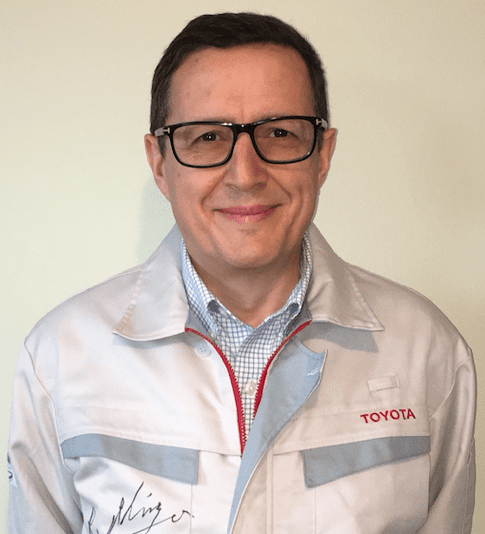
Interviewee: Nigel Thurlow, Chief of Agile, Toyota Connected – Dallas, United States
Roberto Priolo: Can you briefly introduce Toyota Connected to our audience?
Nigel Thurlow: Toyota Connected was established as an agile startup to help Toyota respond rapidly to the changing connected-car technology space. We are not just talking about self-aware cars, but about providing a wide array of connected services to vehicle owners to serve their mobility needs. That’s the vision of Toyota’s President, Akio Toyoda, which we try to execute by leveraging the digital tools at our disposal, from Artificial Intelligence to the Internet of Things. We are an affiliate of Toyota Connected in Japan, set up at the request of Akio Toyoda by Toyota Connected Chairman Shigeki Tomoyama, originally to look at the data capabilities of connected vehicles and at what we could do with all the information our vehicles send us to make driving safer, more convenient and fun.
RP: Toyota has been on an agile journey for nearly two years. Can you please put this in context and share some of the things the company is doing to increase its agility?
NT: First of all, let me say that what many people call an “agile transformation” is in fact an organizational transformation to enable us to become more agile, and scrum is one of the approaches through which we are achieving that. Toyota Motor North America started its agile journey within its ~5,000-strong IT division, our sister company, because it wanted to deliver value to our internal and external customers more rapidly, at a lower cost, with a higher quality. Agile is an empirical approach we are using to solve complex problems. We are of course still fully rooted in the Toyota Production System (TPS) and in the values defining the Toyota Way, but we also recognize the need to improve our ability to deliver better and lower cost solutions more rapidly, and to adapt to changes in customer expectations.
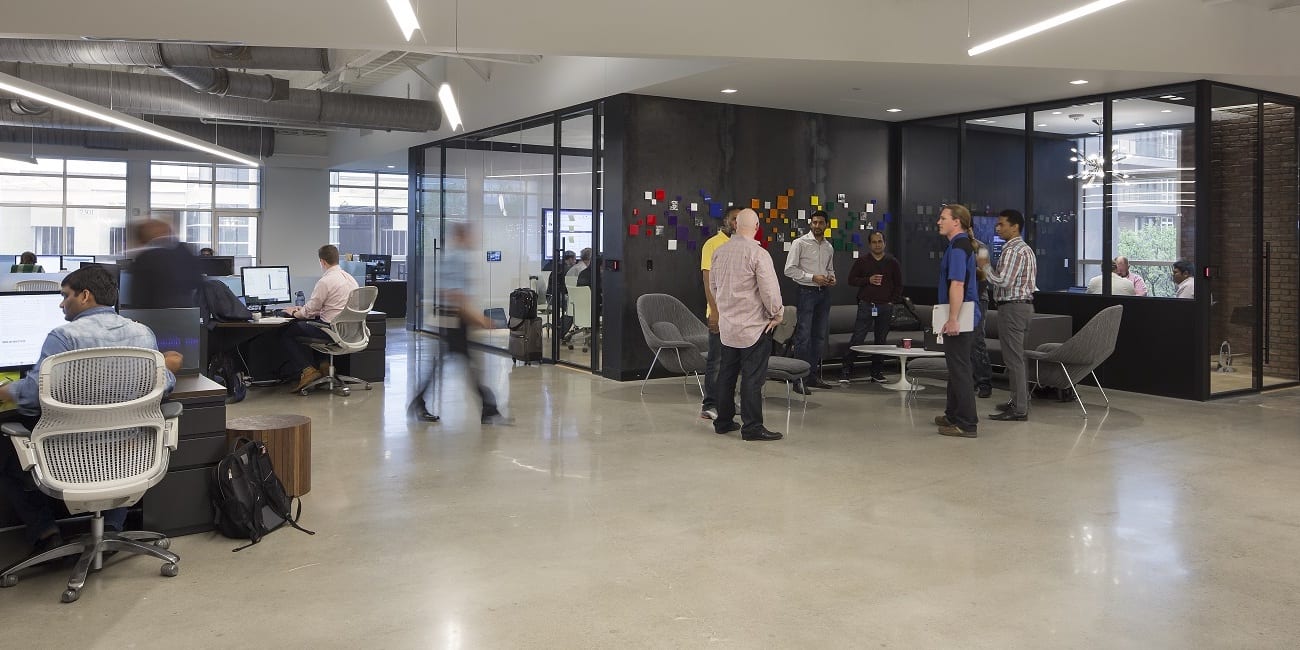
Since those early days, we have grown significantly, starting to provide software solutions for mobility. We have many ongoing projects, from Apps to the Hui car-sharing service in Honolulu in partnership with Servco Pacific Inc, from integrating Amazon’s Alexa into Toyota vehicles to studying data science and AI. We practice and teach TPS and Toyota Way principles, but we are also an agile company: our small, collaborative teams sit very closely together in open-space offices, with obeya rooms, visual boards and andon displays all around them.
We are defining what agility means to Toyota as a global corporation. We have taken a lot of industry knowledge and we are giving back to the community by trying to find synergies between TPS/lean and the agile world. We have recently launched a public offering called Scrum the Toyota Way, for example. We continue to learn new things and evolve as our understanding of this world deepens.
RP: Many organizations seem to struggle to embrace the digital world. What does Toyota have that helps it to leverage the opportunities afforded by digital technology?
NT: Its DNA! Everybody at Toyota understands the customer-first promise and the founding principles of TPS and the Toyota Way. When we discuss the value of embracing new technology and the digital world, we always have our DNA giving us the reasons why we need to do it: our customers. Other companies are often moved by other motives, putting shareholders and profit before the customer, which of course creates huge challenges when it comes to trying to bring change about. Even when they are trying to become lean, they focus more on resource utilization than on making value flow. At Toyota, we are very much aware that focusing on delivering value to customers through our transformation makes everything else fall into place.
Our industry needs to recognize that, if they cannot become more agile, they will struggle to stay competitive. Taking an Agile approach gives us a better and faster way to provide value to customers given the technology and methodologies available to us today. We need to be able to make faster decisions, delivery more rapidly and stay competitive in a changing market. (Cost, quality and delivery – it all boils down to that, really.) Additionally, and that’s where lean and agile come together again, when you start working transparently, waste becomes incredibly easy to see and therefore eliminate.
RP: A lot can be said about the relationship between lean and agile, with the two communities often looking at each other with suspicion. What do you make of this?
NT: This is a small world. Read the Agile Manifesto, written in 2001 to codify a set of values and practices, and you will find so much lean thinking in it. Scrum – the predominant framework for agility – was based on Toyota (and what everyone around the world calls “lean”) and DuPont principles, and it is nothing more than PDCA codified. How long should planning, doing, checking and acting last? And what is actually happening in each of these phases? Scrum tells you all this, providing discipline around PDCA. Looking back at NUMMI, John Shook once said: “To change a culture, you first need to change behavior.” What we are doing at Toyota is using Scrum as a behavioral framework to run faster PDCA cycles. Another example of the great compatibility between these two worlds, which we are currently studying in depth, is the role of the Product Owner in Scrum, which is exactly the same role as Toyota’s Chief Engineer!
There is no doubt lean is deeply embedded into our beliefs as agile thinkers. In fact, it is the root of all agile approaches and techniques. But what we need to understand first is that agile isn’t saving lean and lean isn’t saving agile: the agile movement is enabling companies that are already lean or may wish to be lean to make decisions faster. We are using frameworks like Scrum and tools coming out of the Toyota Production System to enable business agility, thus developing the ability to respond more quickly to market trends. “Agility is not the goal. It’s a result or an outcome,” we always say. The truth is that you don’t do agile (just like you don’t do lean); you become agile by following a number of practices and techniques.
There is great synergy between agile and lean. The irony is that one is based on the other, but once you start becoming more agile, you will become more lean more easily.
Nigel will present at the Lean Digital Summit in Lisbon in October. For info, click here.

THE INTERVIEWEE
Read more


SAVE THE DATE – Our editor introduces the theme of this year’s Lean Global Connection, which focuses on rethinking leadership to ensure our organizations can tackle daily issues while keeping an eye on their long-term strategy.

FEATURE – They say lean is all about people, and yet emotions – something we all feel and express daily – are largely absent from the lean discourse. The authors discuss the role they play in a lean transformation.

FEATURE – When it comes to the fight against climate change, we can’t expect to achieve much until we fundamentally challenge the way we think about resource consumption. Lean is our tool to do that.

INTERVIEW – Racism is not a problem many lean thinkers are called to tackle in their daily lives at work, but that doesn’t mean that Lean Thinking has nothing to say about it.