


Mike Hoseus on why respect is distinctive to Toyota culture
INTERVIEW – Mike Hoseus reflects on his time at Toyota and on how the respect for people side of lean thinking is too often neglected and we tend to focus on continuous improvement only. The two must go together, or your house will collapse.
Interviewee: Mike Hoseus, Executive Director, Center for Quality People and Organizations
Roberto Priolo: You worked as a General Manager for Toyota in Kentucky in both Production and HR. What is the role that HR has to play in a lean transformation?
Mike Hoseus: Before I answer that, we need to first talk about what a lean transformation is, or even what lean is for that matter. There are many definitions and connotations out there – unfortunately, the majority of them see lean as a set of tools, a project, or rapid improvement event. Of course it isn’t. Lean is a culture, an enterprise management system. Over time, I have learned to view and teach lean based on the four Ps – purpose, process, people, and problem solving – which broadens people’s understanding and definition of what it is.
The same applies to HR and its role in a transformation. Limit your definition of what HR is to an administrative role, and you won’t go far. Broaden that definition, however, and things will begin to change. Look at purpose and HR becomes a strategic partner that should be at the table facilitating our pursuit of True North; look at process and we want HR to be a business partner (for that, they have to understand the business and lean!); look at people and HR takes on that checks and balances role, advocating for the team member and their capability development. Finally, we want HR to be part of our efforts to turn our people into problem solvers, but, more importantly, we want them to apply lean to their own work. This is a much wider and all-encompassing view of what an HR department can contribute to a lean journey than we traditionally think.
RP: Can you give me an example of how your time at Toyota helped you to develop your understanding of the role of management in a transformation?
MH: After two years as a group leader, working every day to identify and solve problems, standing in quality circles and observing, watching the work and improving it more and more, we got to a point where we were close to zero on a lot of our indicators. In a couple of them, we actually were. We had zero defects and zero incidents, for example. Everything on our scoreboard was green.
I had a big smile on my face, as you can imagine, but it didn’t take long for my senior Japanese trainer to come to the gemba and take me to my wall. He said: “I see your line is running well.” That was the recognition and celebration, I later learned. “Now what?” he then asked. I was taken aback and immediately thought to myself: “Now I rest!” I had hit zero, after all. “Mike-san, you have no problem here… And that’s a big problem!” There is always room for improvement, I was told. The trainer kept encouraging me to get deeper, until he finally challenged me to coach our team leaders and team members to eliminate one of our 20 processes by identifying enough work that was not value added.
That’s when I learned what my role was. I thought it was to get my chart green, but it wasn’t. It was to create an army of problem solvers.
RP: If you had to tell me the one distinctive trait of Toyota’s organizational culture, that one that sets it apart from everyone else, what would you say?
MH: Trust and respect, which are defined and lived out in many different ways across Toyota, is the trait that stuck with me the most. Our purpose as organizations should not be profit. We need it, but it’s not the end game. Profit is important in that it allows for long-term prosperity for employees, suppliers, and the community, and that is respect in its largest definition. At front-line level, respect for people expresses itself through servant leadership.
As a matter of fact, the Toyota house has two pillars: continuous improvement and respect for people. Too many practitioners focus on the former and tend to neglect the latter, which is when the house normally collapses. The two really must go hand in hand.
RP: There now seems to be a clear understanding that the key to a successful and lasting transformation is the ability to connect a company’s strategy with day-to-day activities. Unfortunately, that is also where things often go wrong. What are your recommendations?
MH: Strategy deployment is indeed where a lot of organizations struggle. This is one of the instances in which the difference between management by objectives and lean management is most evident. MBO is entirely based on results (get the percentage, doesn’t matter how), while hoshin is about developing capability to build the processes and activities that are going to get us there, through continuous PDCA. Most companies miss this about hoshin, but results should be seen as a side effect.
One of the most common issues with strategy deployment is our failure to connect the assessment of how well we are doing with our daily work. To do that, we need a daily management system – one that spans the entire enterprise, not just operations. I think it’s important to put as much information about the daily work up on visual boards on a regular basis, to avoid losing track of what’s going on and having to scramble to find the data we need two weeks before our quarterly assessment. Hoshin is most effective when we can take the processes and activities we developed and then link them to everyone’s daily work. Now everyone knows the goals and how to get there. Then we can identify and address gaps as a team and make daily progress toward our long-term goals.
THE INTERVIEWEE

Read more


CASE STUDY – The CEO of a hospital in Johannesburg looks back to the last five years to reflect on a lean healthcare transformation that is creating positive outcomes for patients.

FEATURE – A former plant manager reflects on his experience supporting a team with the implementation of Kata in the daily management system and explains why, when it comes to Kata questions, simple is best.
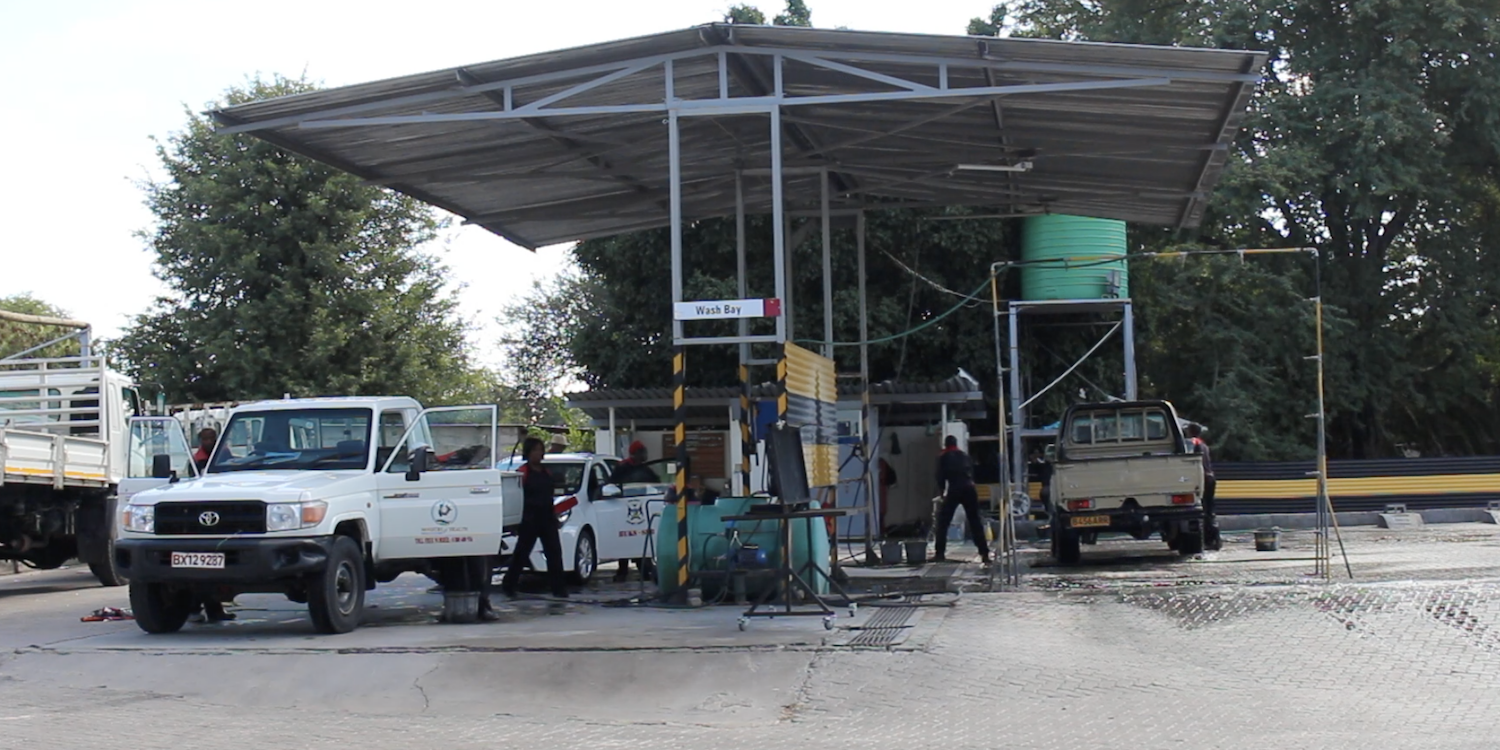
FEATURE – A leader’s creativity and care for her people can lead to extraordinary results even in the most challenging of environments. As the latest LGN book comes out, the author reflects on one of the most impressive lean transformations you will come across.

WOMACK'S YOKOTEN – Lean in agriculture might still be in its infancy, but there is a small farm in Indiana that is already proving how valuable lean principles and techniques can be to this industry.