

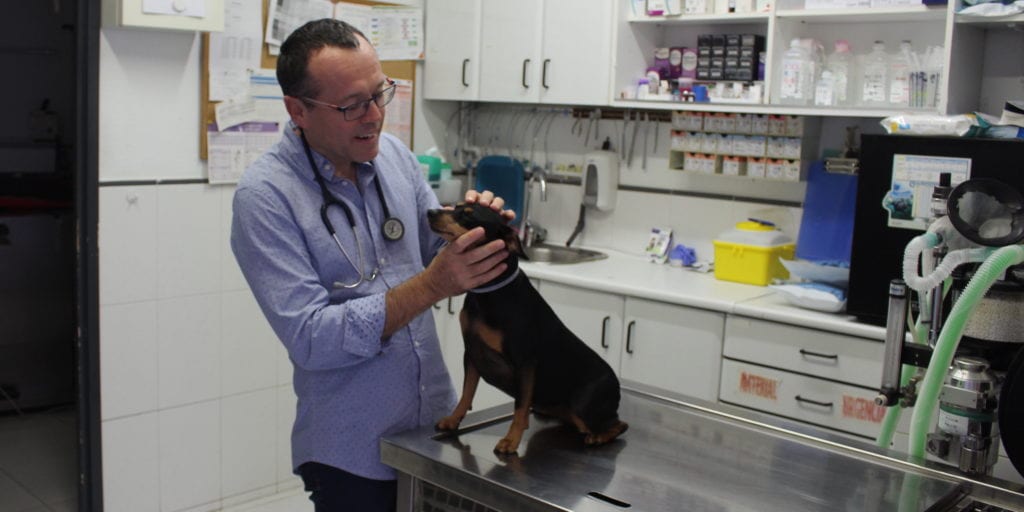
The lean veterinarian
INTERVIEW – A 22-people veterinarian hospital in Barcelona has recently turned to lean thinking. We caught up with the owner to learn how things have changed six months into the journey.
Interviewee: José Tarrasón, veterinarian and owner, Canis i Felis – Barcelona, Spain
Planet Lean: How did you first discover lean? There aren’t many lean veterinarians out there!
José Tarrasón: It was lean finding us, not the other way around. It was a gift, you could say, given to us by two large companies we have worked with for a long time. They came to see us together with Lalis and Cristina Fontcuberta of the Instituto Lean Management, because they wanted to run an experiment with lean in a veterinarian hospital. There is a lot of lean in human healthcare, but no known experiments with vets. That initial visit highlighted a number of opportunities for improvement and, on our part, we saw lean thinking as something different that had a lot of potential.
As veterinarians, we are attracted to tools and standardization. In the past we had tried to establish some standard operating procedures and we had even given coaching a go, but we had found nothing that had the power to engage people in transforming the business. That’s what we saw in lean.
PL: How was your first move? And why?
JT: To see if lean had indeed a way of working at Canis i Felis, we decided to take two months to run a pilot project. During that time of the year we typically get a bit less work, which was a great opportunity to focus on our lean implementation. We wanted to show the potential of lean to as many people as possible, and to do that we picked a project that would yield noticeable results quickly: stock control for the supplies we use in the hospital. We were experiencing a lot of waste in there, in the form of movement and errors in our orders.
To improve the situation in our warehouse, we implemented a kanban system – an approach that appeared brilliant, yet simple from the get-go. It worked really well, allowing us to prepare orders much faster, reduce the number of mistakes we make when ordering supply, and to ensure a reliable supply (with no materials missing). People’s work has gotten easier, to the point that we have recently started to use kanban cards to also manage the storage of drugs and vaccines. The biggest impact of that very first experiment, however, was the fact that it caused more and more people to ask why things are the way they are. It made us all more inquisitive. Why are things here? Why do we store them like this?
The other pilot project focused on 5S in our examination rooms, with the goal of ensuring that every employee’s work station is supplied with everything she needs to do her job well. We also wanted to encourage people to be responsible for their place of work.
We weren’t sure we could find a way to do things differently – after all, we have been doing them the same way for 23 years – but we did: lean was something new, it was getting our people involved, and it worked! We liked what we saw, and we decide to continue down the lean path.
PL: What came after those first two months? What are you working on now?
JT: We are still working on 5S, bringing it to our reception and laboratory. We are also exploring new tools, like value stream map. I think VSM will prove invaluable to us, especially when it comes to managing hospitalized animals: these are typically cared for by a number of people in our hospital, which makes it critical to understand how the work is distributed and how different functions interact and communicate. I already know value stream mapping will be harder to introduce than 5S, because we are talking about animals in critical conditions and worried families rather than boxes and order forms. Yet, I am convinced it will help us provide a better service to our customers.
PL: What does staff think about lean?
JT: As owner, I have approached this with a lot of enthusiasm from the very beginning. It didn’t take long, however, to encounter some resistance and skepticism among our employees. Some of them have worked with us for 15-20 years, and over that time they have seen a number of initiatives aimed at improving our work. I can’t blame them for being a little skeptical at first. However, something happened we got them all together to listen to our coaches Lalis and Cristina present the project with the help of games and simulations… they got excited. Lean is inclusive, and it calls for everyone to contribute and for everyone to be valued. Even though keeping people enthusiastic is hard, we think that this methodology can really help us capture their imagination.
PL: Would you share a couple of lessons you have learned over the course of the last six months?
JT: People engagement is the hardest thing to achieve – that to me is clear. Sustainable business growth is also a challenge, as we continuously need to find better way to serve our customers and their pets. I am sure lean can help with both.
The other thing I have learned is that, at least at first, you need the support of a coach. It is critical for us. You can read books and articles, but nothing beats having an expert coach showing you the tools and helping you to keep the momentum going in your transformation. Lean must be practiced to be understood!
THE AUTHOR

Read more


FEATURE – The conflict unfolding in Ukraine acts as a tragic reminder of the threat posed by despotic, unapproachable, and paranoid leaders, says Sharon Visser.

INTERVIEW – At last month’s Lean Digital Summit in Lisbon, César Gon told attendees how, with lean digital, we have an opportunity to finally get the attention of CEOs and business leaders.

PROFILE – Earlier this month, our editor visited the US and sat down with the CEO of a community health center near Boston. His humility and honesty about his lean leadership are striking.
MY AHA MOMENTS – The author recalls a lean transformation that stalled until leaders confronted the culture of blame in the company—a precondition for surfacing mistakes and improving processes.