


Make it theirs first
MY AHA MOMENTS – The author looks back on a factory transformation that proved lasting change begins when improvement becomes people’s own idea.
Words: Daniel Halvarsson
“That only works in places like the car industry, where every unit is the same. Everything we build here is one of a kind. None of that applies to us,” the production line manager said while standing in the middle of his shopfloor. A few of his operators were close enough to hear, and close enough that agreeing with me would have cost them something. I was new, and I had just used the words flow and waste in the same sentence.
“We know what we’re doing. The way we assemble these units takes real skill, nothing like some mass-producing plant. There’s no waste to find here. Except when engineering sends the wrong drawings. Then we lose time fixing it,” continued the manager.
I had been asked to build a new, more efficient facility and move production into it. This was at a high-voltage equipment manufacturer in Sweden. I could see the waste everywhere I looked. That was the real problem.
In the production hall, units stood in place for weeks, sometimes months. Each one was built where it sat. Everything but the welding came to the unit instead of the unit moving through the space — assembly, electrical wiring, testing. Whoever worked on it carried their tools to the place. The only thing anyone really measured was the day a unit started and the day it shipped. Nothing in between. Problems got solved by whoever ran into them, quietly, with whatever was at hand. They had worked this way for decades, and from where they stood nothing was broken.
I assumed that showing the waste I saw was the job. Enough to get everyone to understand how we could improve the layout and flow.
I spent some time on the floor and then started pointing things out — the unit standing untouched for days between steps, the operator crossing the hall to find a tool that had wandered off, the same task done five different ways because nobody had written down the best one. To me it was obvious. To them it was an insult.
I was young enough not to understand that something can be obvious to the person who just walked in and invisible to the people who had stood inside it for twenty years. Their pride wasn’t ignorance; in fact, it was the reason the place ran at all. And there I was, telling them the thing they were proudest of was full of waste. No wonder they closed ranks!
For weeks, I kept pushing and pointing and got nothing but more distance and scepticism. Forcing it would have bought me compliance, the kind that holds while you’re watching and collapses the first time something goes wrong. Eventually, I tried something different. Instead of telling them what was wrong, I asked one of the production line managers how we might capture the good work his people were already doing, so a fix one operator found didn’t die at his bench. He liked that question. It was about their skill, not their failings.
Out of it came a rough sort of morning meeting —a few minutes at the start of each day to look at what we had to ship, what might get in the way, and how someone had solved a problem the day before. Once people were describing their own fixes out loud, they started describing the problems, too. And once the problems had names, the waste began to surface on its own. The only difference was that now it was their observations; not mine.
Once they started to open up, we arranged a few benchmarks, so managers and operators could see how others ran a production line. They saw how units moved between stations instead of people moving between units. After a benchmark session, a production line manager (one of the men who had told me our units were too unique for “any of this”) said it before I could: “It would be so much easier if the units moved and each station had what the operator needed for that job. I’ve wasted time and money looking for lost tools, bought new ones to replace them, then found the old ones later.” Nobody had told them flow would work for their one-of-a-kind products. They decided that themselves.
The hardest part was still ahead. A new factory was coming, which meant a completely new layout — the whole flow drawn from scratch. There was a lot of pressure to get the layout done quickly and move on to the other parts, but a layout handed to the team would only last for as long as I stood next to it. So, despite the time pressure, we worked it out together, station by station, with the new knowledge and ideas from our own findings, until the flow on paper was theirs. When the new plant was finally running, throughput time dropped immediately by around 40%.
About a year after I’d moved on, an employee I’d worked with called me. He didn’t want anything in particular. He just told me the line was still running the way we’d left it, and that they were still finding things to improve. Then we talked about something else. I’ve thought about that call more than any figure from that plant (unlike a result, it’s the kind of thing I couldn’t force myself).
Since then, I’ve worked with many companies, and I’ve watched good changes vanish the week the person driving them left, because they belonged to the change agent and never to the room. We celebrate the leader who pushes something through, but we rarely ask what’s left after they leave. And we almost always do it in the wrong order — starting with the transformation, the new layout, the new system, before we’ve done the slow work of helping people understand it well enough to want it themselves. That work is what turns a change you install into one they’ll keep. I worry that most of what we call transformation is just a shape one person is holding up, while everyone else waits for their arms to tire.
THE AUTHOR

Read more
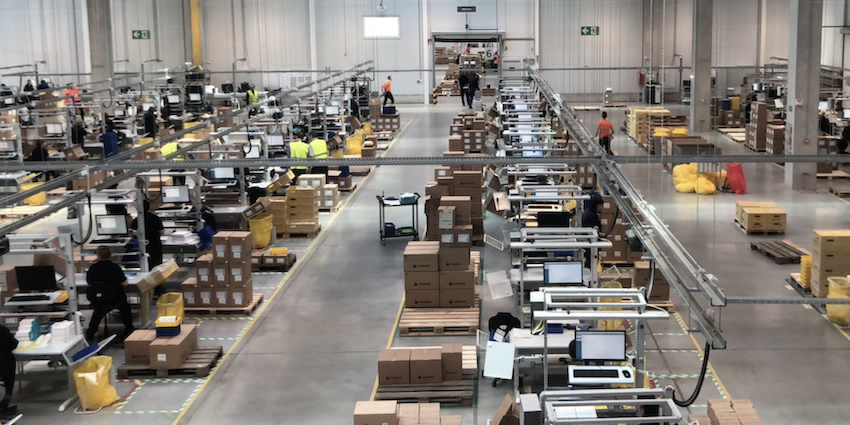

VIDEO - In February, a group of Lean Global Network coaches visited Coloplast's Parts Distribution Center in Hungary to help the local team improve the internal lead-time across the facility.
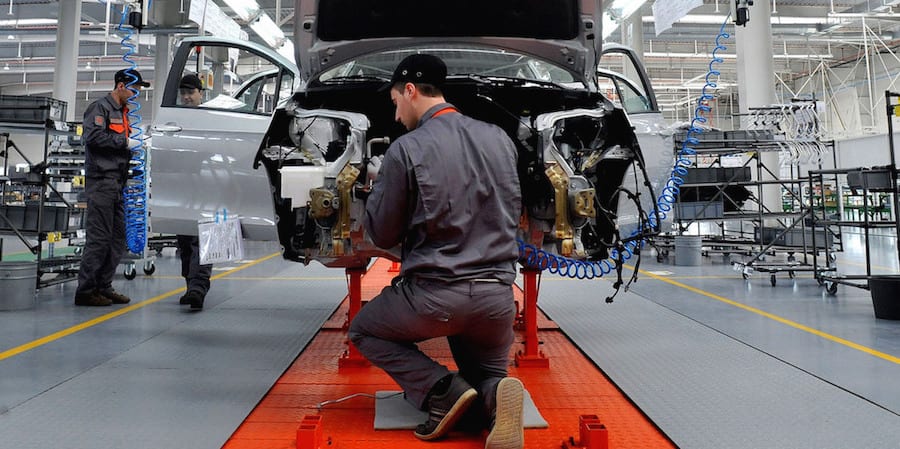
FEATURE - The original TPS "house" had levelled production at its foundation because Toyota understood that establishing and sustaining continuous improvement is impossible without creating stability in production first. What about your transformation?

FEATURE – Lean encourages us to go to the gemba as much as we can, but what should we actually do when walking the workspace? It turns out it’s not so much about doing as it is about thinking.

FEATURE – This article explains how Lean Thinking and the agile method can strengthen and optimize our digital transformation efforts.
Read more
MY AHA MOMENTS – The author recalls a lean transformation that stalled until leaders confronted the culture of blame in the company—a precondition for surfacing mistakes and improving processes.

MY AHA MOMENTS – In the second article of his new sieries, the author addresses the hidden cost of multitasking, explaining why focus—and not constant activity—drives real productivity.
MY AHA MOMENTS – Opening a reflective new series on his lean “aha” moments, the author recalls discovering the power of gemba observation to reveal hidden capacity without investment.

INTERVIEW — In this Q&A, Michael presents his latest book—a glossary of lean terms that’s meant to challenge our long held beliefs about lean concepts, and to make it fun.