


Stability first: lean lessons from a French soccer club
NOTES FROM THE GEMBA – At FC Versailles, a French third-tier soccer club, two former retail executives are building stability (in infrastructure, finances and team) as lean’s very first step.
Words: Catherine Chabiron
When you think of Versailles, soccer is not the first thing that comes to mind. Its name conjures images of golf and horseback riding, besides those of sumptuous palaces and royal banquets. Yet, FC Versailles has an interesting story to tell. In 2023, after working together in management roles in the retail sector, Alexandre Mulliez and Fabien Lazare purchased the football club, playing in the French Ligue 3, and they are now trying to infuse lean principles into it. (And yes, it isn’t lost on me that Lean and soccer may seem an odd pairing.)
Recently, I visited Fabien, the general manager, eager to understand what a business can learn from professional sports and, at the same time, what a deep commitment to lean principles and human capital development can bring to a soccer club. As I soon find out after arriving at the club’s HQ, the challenges are enormous.
The first step for the team is to build a bridge between two worlds — soccer and Versailles — that have little in common.
The idea of establishing soccer at the heart of the city faces resistance from cautious local officials, who fear potential noise and disorders after matches, so the team must play its home games at other, distant venues.
Another major challenge is that the club is running a deficit. Matches played far from the city struggle to attract fans, who find it hard to reach the stadiums on Friday evenings to watch games after work. Everything needs to be rethought in terms of merchandising, the spectator experience, and overall appeal.
In a 2025 interview, Alexandre made this point very clear: “90% of our role now is to create the conditions for the players to succeed.”
Creating those conditions, however, requires stability — the very first step of a lean transformation.
SEEKING A STABLE HOME
“I would never have taken over a club without a stadium,” another club executive once told them after the purchase. On paper, however, the stadium was a given, since the team played at the Jean-Bouin Stadium in Paris. Unfortunately, Paris FC, another soccer club recently acquired by Antoine Arnault (LVMH), made a better offer, and they had to give up the venue.
Fabien shows me on a map how the team looked for another solution in Chambly last year, before relocating this season to Camp-des-Loges in Saint-Germain-en-Laye.
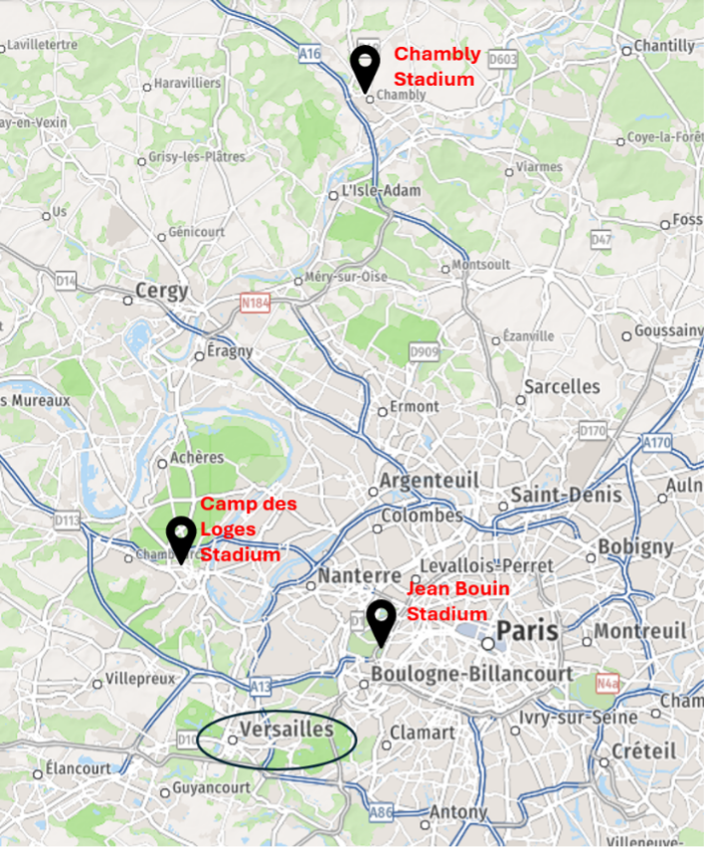
The solution remains temporary. “If we move up to Ligue 2, the Camp-des-Loges stadium will no longer meet the requirements,” Fabien explains to me.
But a stadium isn’t just a place to play home games. It must also be a place where a genuine sense of belonging is created and nurtured for fans and supporters. A stadium is also a place to host the administrative staff (support and sales functions), bringing them closer to the athletic team. Finally, it’s a way to attract business, as they offer a service of event management around soccer matches.
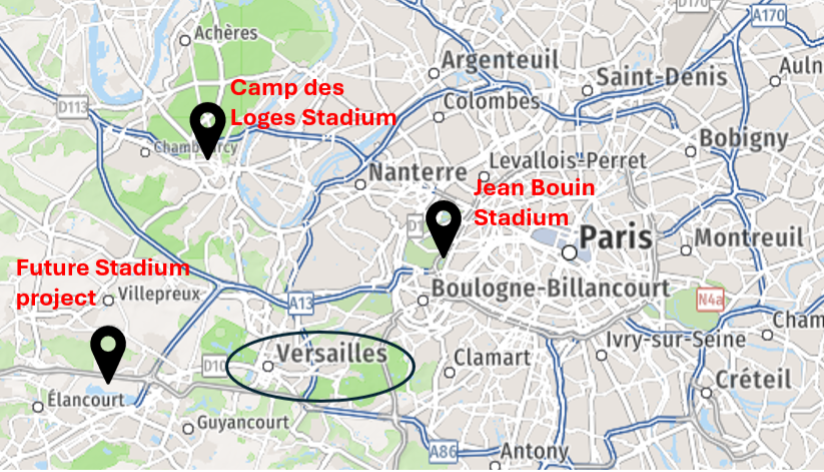
The team is therefore working on a stadium project, and Fabien shows me the concept paper. Based at the Saint-Quentin-en-Yvelines recreation center, they are developing the new “Village FCV” — a stadium with approximately 10,000 seats (for fans and corporate partners), a training center, a youth academy, and administrative offices. The concept paper outlines the “What does ‘doing it right’ mean?” along with the expected performance for each client expectation, the timeline, and the target cost. Even more interestingly, the team is considering the question “What do we need to understand/learn?”: Ligue 1 and UEFA stadium requirements, environmental protection standards, and the revenue they could generate from non-match events. The goal is to leave nothing to chance.
STABILIZING CASH FOR THE LONG TERM
Another major challenge is balancing expenses and revenue, as the club is currently running a deficit. Fabien, Alexandre, and the sales teams practically started from scratch, with revenue totalling half a million euros at the time of the purchase. It was unthinkable to cover player contracts, staff salaries and payroll expenses, agent commissions, stadium rentals, and travel costs with that amount.
Alexandre has a knack for marketing, and he and Fabien immediately set out to address the product-market fit: they needed to identify FC Versailles’s target market and offer it an appealing product. We’ll see later how the work on the club’s values and playing style, in collaboration with the coach, aims to gradually shape the image of a respectful, disciplined, and bold club.
But the first obvious step was to build relationships with the fans who come to the games, prepare tifos (the design or visual motifs created and displayed by fans on the stands), sing chants, and liven up the game from the stands. These fans stuck with the club even when it moved to Chambly. Fabien shows me a video clip of the group on the bus, watching the first half on their smartphones because they’re working and it takes them two hours to get to Chambly on a Friday night. Fabien has since set up a group chat with the fan leader to stay constantly informed of his expectations and feedback. Club officials regularly attend matches and pay close attention to what these fans like and expect from the team. The players used to rarely acknowledge the supporters in the stadium, but that has changed: even a simple nod or wave from the players toward the fan group is celebrated.
The teams have also begun extensive work on social media to develop digital content about FC Versailles that can appeal to a broader and younger audience. But what amazes me the most — and is a first in France for an unknown Ligue 3 soccer team — is the bold decision to film and broadcast a fly-on-the-wall series documenting a season in the club’s life and offering a fully immersive experience. Canal+ was won over by the project to film them on a daily basis, with complete transparency, across six episodes. Season 1 attracted more than a million viewers, who were kept on the edge of their seats by the dramatic twists and turns in the club’s life — whether it was the injury of a key player, fans’ disappointment over a lack of fighting spirit, or bad news on the administrative front. FC Versailles’s popularity has skyrocketed on social media since the series aired.
Fabien shows me the ticket sales figures for matches: back when the team played at Jean Bouin or Chambly, the stadium’s attendance rate never exceeded 8%. Thanks to increased visibility, the groundwork laid in improving the team’s play, and recognition of the role played by the club’s earliest supporters, the stadium occupancy rate at the better-sized Camp-des-Loges is now 80% — even though only 430 of the 1,000 seats are covered and it rained heavily this winter.
Another area of cash stabilization is merchandising: Alexandre and Fabien have capitalized on the originality of the seemingly incongruous “soccer-Versailles” pairing by offering a range of jerseys and even a lifestyle clothing line inspired by sports and Versailles.
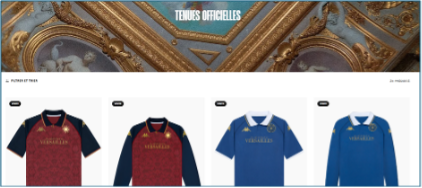
The jerseys are sold in 40 countries, achieving sales figures rarely seen for a Ligue 3 team (8,000 sold directly by the club during the 2024–2025 season).
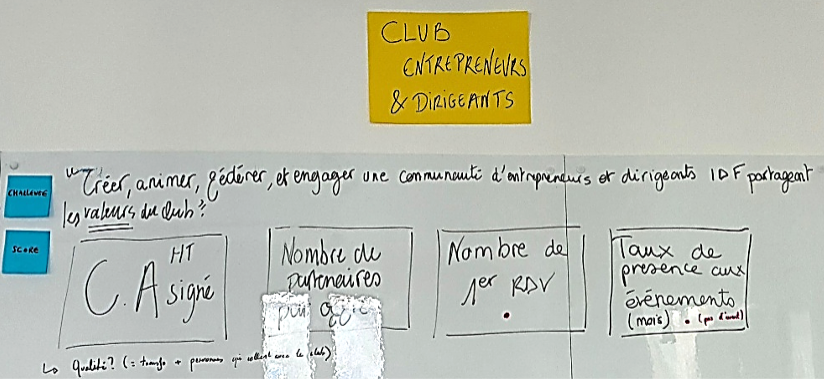
This visibility has enabled the team to launch longer-term marketing initiatives to generate and stabilize additional revenue. Since a soccer club is funded by sponsors, it’s essential to reach out to them and win them over to secure partnerships. It starts with what is known in soccer as “hospitality events”: in the absence of a dedicated stadium, a VIP tent accommodates 120 people on game days. This can serve as a team-building exercise or an opportunity for a company to host clients or prospects and build valuable relationships. The marketing team is also developing a club for entrepreneurs who come to experience the reality of a soccer club: the focus is on immersion, co-creation, and learning.
Attracting sponsors — whether national or international brands — is a major challenge for a Ligue 3 soccer club. Hence the idea of setting up a marketing agency and creative studio to attract them through co-branding campaigns. The campaign with Godot et Fils, a renowned expert in precious metals in the Paris market, perfectly illustrates this type of approach: two new gold-colored jerseys, “L’Élégant” (Smart) and “L’Audacieux” (Daring), are being offered for sale alongside a contest where winners can win gold bars slipped directly into their packages.
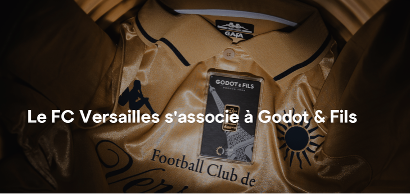
Since the takeover, revenue has grown several times over, and it continues to rise. Expenses, however, are still far from covered; Alexandre and Fabien know this is a long game.
Alexandre is also looking to organize fundraising efforts that will allow him and Fabien to retain a majority stake while covering the costs of the future stadium. Here again, Fabien points out to me on a wall chart that it’s not just about tapping into a contact list — no matter how extensive it may be — but also about seeking out partners who can bring them soccer expertise, lean know-how, a local network, and enthusiasm.
BUILDING A STABLE TEAM
Alexandre is one of the heirs to the Auchan Group, where he has led several divisions. He also worked there for a year as a produce department manager to learn the business from the front lines. It was there, in fact, that he learned to collaborate with Fabien. That’s what makes them both aware of the importance that must be placed on everyone working on the front lines.
For Fabien and Alexandre, the goal is to create and unite a single team — one with diverse roles, to be sure, but where everyone contributes to the overall success, whether it’s a player, the coach, the video analyst, the team manager (who handles travel arrangements, hotel selections, menus), the equipment manager (who prepares the locker rooms, the various jerseys, and the gear), the social media manager, or the events coordinator. Stabilizing the environment during a game is essential.
Fabien also explains to me the importance of monitoring working conditions during training. Each player wears a GPS tracker, which allows Jordan, the coach, to control the intensity of the workout. Each player’s mental and physical condition is also assessed through a questionnaire upon waking up or after practice. The goal is to prevent injuries, excessive fatigue, and a drop in morale. “Player availability correlates strongly with the points we earn in the leagle table,” Fabien tells me.
Another key to success: stabilizing the team. Fabien illustrates the correlation between this stability and results using the example of Le Mans, which moved up from Ligue 3 to Ligue 2 last year and was ranked third in Ligue 2 at the time of my visit: “75 to 80 percent of the players are the same as last year; the entire team has grown stronger together.”
“FC Versailles has seen a lot of player departures and coaching changes over the past two seasons,” Fabien tells me, “but the team is now stabilizing around a specific playing style.” The recruitment of a player is, in fact, subject to a meticulous, attitude-based scrutiny, where behavioral assessment (work ethic, ambition, interpersonal skills within the group, family support) counts for at least as much as technical evaluation. The focus on the team is so strong that the club avoids signing players already playing in Ligue 1 or 2 — even those nearing the end of their careers — to avoid the risk of clashing egos or having to manage a need for recognition. Instead, recruitment focuses on young players eager to prove their worth, either from lower divisions or trained by the FC Versailles soccer association, which coaches youth and junior teams.
LEARNING TOGETHER
A company has much to learn from elite sports. Conversely, a lean system can enrich the expertise of the athletic staff and, of course, the administrative team.
The “product” that FC Versailles is developing isn’t limited to a stable roster of players who know each other well; the team must also be able to showcase an attractive, cohesive style of play. One of the segments in Season 1 on Canal+ focused on this key question: “What’s your theory on what makes a successful team?”
The fans know this all too well: they want players to push themselves beyond their limits, to give their all, to show a drive to move forward, and to acknowledge their support. Winning is better, but losing with dignity can also be impressive.
Fabien shows me how they worked with the coach, Jordan, to build a playing identity rooted in the values the club upholds. For each playing principle, they sought to highlight the “dos” and “don’ts,” much like the industrial visual monitoring of good and bad parts.
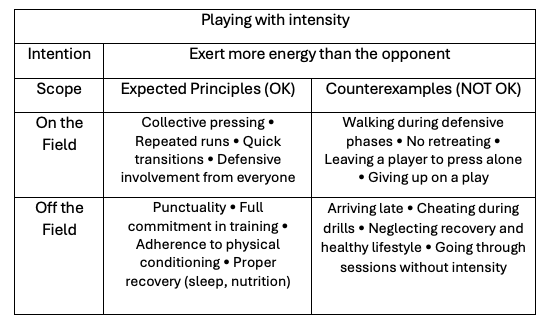
Jordan has developed a game model based on offensive and defensive behavior, transitions, and set pieces. He uses this model as the foundation for building the game plan for each match, incorporating variable factors: the team’s condition (availability, fatigue), the context (home or away, the referee, the weather, the field conditions), and the opponent (their playing style, strengths, and weaknesses). From the club’s values to the game plan for a specific match, the idea is to establish a clear and consistent approach from one match to the next. Jordan is very mindful of maintaining consistency between words and actions to foster trust and coherence.
Fabien shows me how Jordan leads a full PDCA cycle during the week leading up to the match and in the days following it. A week before, the review of the previous match begins: Jordan, his staff, and the video analysts work all weekend to analyze Friday night’s match. This analysis defines the “adjust” and “plan” phases for the week, along with the training focus to correct deviations from the previous game plan and to prepare for the upcoming game. The game plan for the next game (the “do” phase) is presented to the players the day before. Final adjustments are made during the pre-game huddle in the morning and, of course, at halftime.
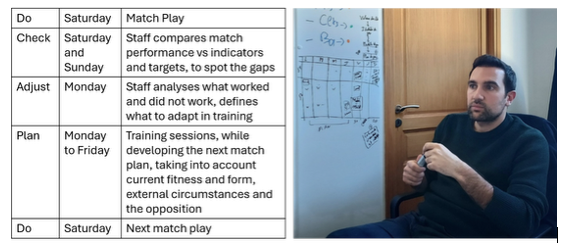
This recurrent PDCA cycle is a comprehensive learning process for both the team and the staff. Fabien has an example in mind: “Moving from three forwards, including two wide players, to a playmaker supporting two strikers, helped us create far more goalscoring chances through better connections between players and a more effective use of their strengths.”
Fabien spends much of his time on the gemba, in the offices as well as at the stadium. According to him, “the team’s stability allows players to develop strong relationships on both a personal and professional level.” The teamwork emphasized by Jordan creates automatic responses, a unit that moves up and down the field together. A player can therefore make a blind pass to a teammate coming up behind him at full speed four meters away because he knows the teammate is there, as part of the team’s tactical setup. “The big difference between business and sports,” says Fabien, “is that almost all of the time is devoted to training and individual development, since the need and capacity for learning differ so much from one person to another. Traditional businesses set aside only a small fraction of their time for learning.”
Fabien, who knows how much a lean system pushes us out of our comfort zones, shares with me an experience he had during training: “I see Jordan dividing the players into small training groups. At the end of the session, he brings them together and explains that he deliberately had them work with players they don’t have a deep bond with, so they could learn to function with someone they don’t know well.”
I see a lot of junior staff in the offices: “We tried having senior staff members adopt lean principles and the stated values, but they struggled,” Fabien admits with a smile. “We gave up on that, so now we have a real challenge in terms of coaching and developing their expertise.” He therefore encourages every member of the coaching and administrative staff to identify their internal clients and the challenges they face, then to define how they’ll measure success or progress and the means to achieve it. We take a look at the work file of the sports director, Salomon. “Salomon is an excellent talent scout,” Fabien tells me. “He’s already managed to sell two of our players at a price well above the national average. But look at the constraint he’s placed on himself: sell a player, yes, but not at the risk of compromising the team’s quality and stability.”
The results? They narrowly avoided relegation last year; at the time of my visit, they were fifth in Ligue 3, with games left to play. As we publish, they rank three. “We have time,” says Alexandre. “This is a lifelong project.”
This unfolding human story shows just how futile it is to try to build a business without laying the proper foundations: stability, trust, a sense of belonging, the ability to solve day-to-day problems, and ensuring the best possible working conditions.
THE AUTHOR

Read more


FEATURE – We see the shortcomings of strategies based solely on financial metrics every single day. The author discusses how Lean Thinking offers an alternative that leads to better and more sustainable results.
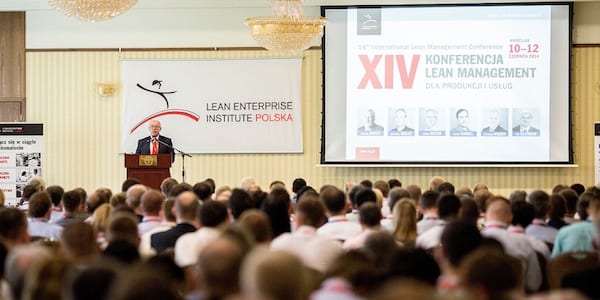
REVIEW - Roberto Priolo reviews the 14th Lean Management Conference, held earlier this month in Poland. With great presentations and speakers, the event left him with a lot to reflect on.

NEWS - Our institutes in Turkey and Israel have collaborated closely for years. A few weeks ago, the President of Lean Institute Turkey flew to Tel Aviv to learn about Israeli agriculture.

INTERVIEW - Jim Morgan looks back at his years at Ford Motor Company and talks about the challenges and opportunities of applying lean management ideas to new product development .
Read more
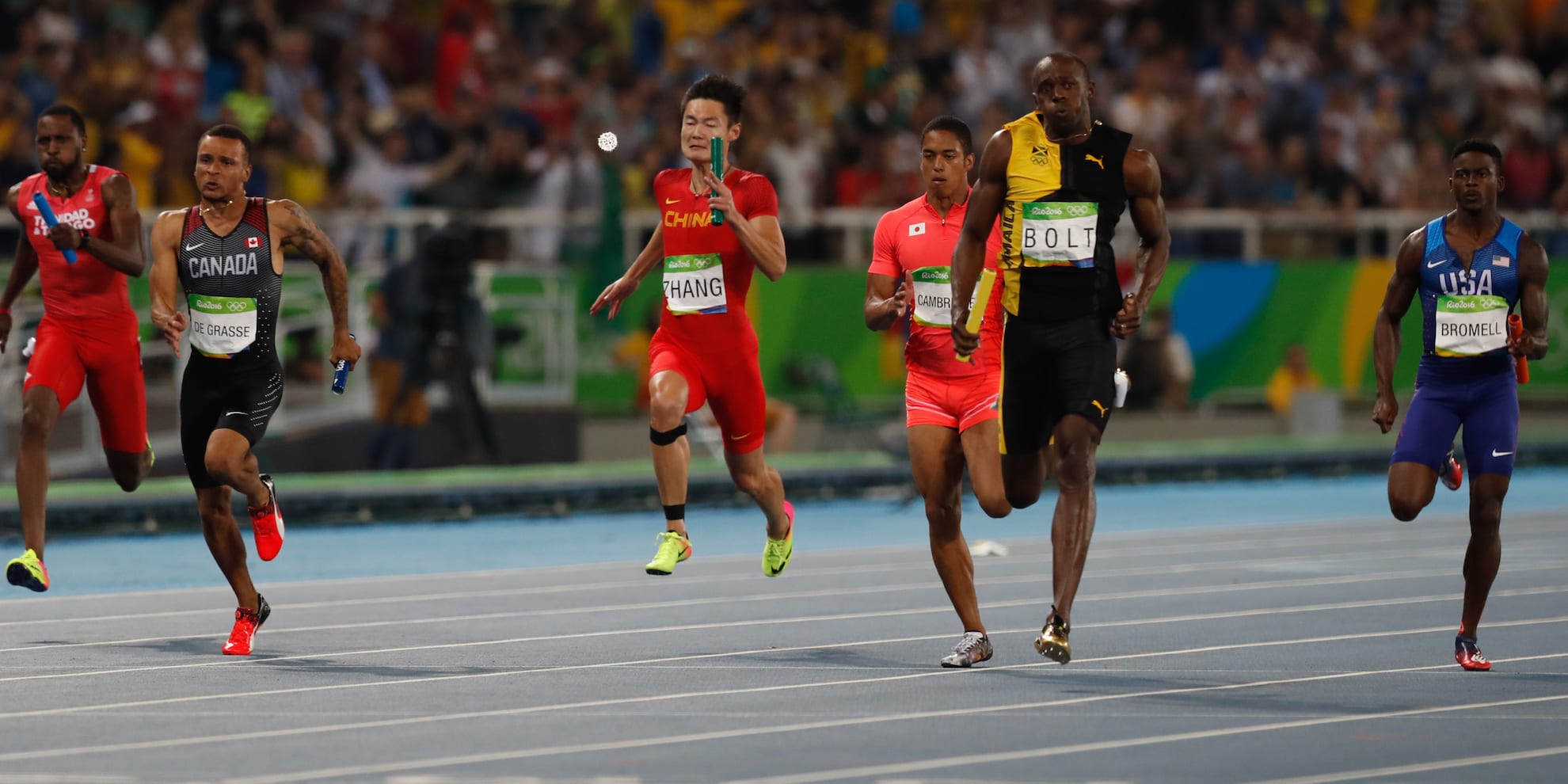
FEATURE – At the 2016 Olympics in Rio, the Japanese Men’s 4x100m relay team went from being the underdogs to winning a silver medal by apply lean problem solving.

NOTES FROM THE GEMBA – The author visits the Parisian airport of Orly to learn about a pilot project (pun intended) that aims to tackle the late departure of flights using lean thinking.

FEATURE – A situation that would be unthinkable in a sports context is an every-day occurrence in many of our organizations. Should we change our way of thinking about our machinery?

OPINION – Most organizations today can only dream of receiving the type of enthusiastic support that certain sports teams get from their fans. In order to do that, they need to forget short-termism and put their customers first.