


The Toyota Economic System and the end of trade-offs
FEATURE – TPS is an altogether different economic model—one that resolves the trade-offs between efficiency, flexibility, human dignity, and sustainability that mass production treats as inevitable.
Words: Olivier Larue
Most organizations attempting to apply Toyota Production System (TPS) principles make the same mistake: they start with culture and leadership behaviors, without first understanding the economic logic and technical system that give those behaviors meaning. They emphasize respect for people, coaching, and engagement, but continue to operate under the assumptions of mass production. The result is predictable: the language changes, but the work does not—and performance improvements fail to materialize.
I saw this pattern repeatedly at the Toyota Supply Support Center (TSSC) while working to develop Toyota’s supplier base, and I continue to see it across many organizations starting their TPS journey. In one project with a manufacturer, the leadership team had fully embraced “respect for people” and daily management routines, but production remained organized around large batches to maximize equipment efficiency. Supervisors coached teams and held regular improvement meetings, yet lead-times remained long and inventory continued to grow. Financially, the company appeared profitable, but cash was increasingly tied up in work-in-process and finished goods. When we expanded the focus from management routines to include flow—reducing changeover time, rightsizing batch sizes, exposing problems, and stabilizing processes, the results were immediate: lead-time dropped, inventory was reduced significantly, problems were made visible early, and many of the behaviors they had been trying to instill finally began to take root. The technical system created the conditions for the culture to work.
TPS is often approached as a management system, when in fact it is a fundamentally different economic system. Based on my experience at TSSC and NUMMI, I believe that production systems have long forced organizations to choose between competing priorities: industrial performance versus human dignity, efficiency and affordability (profit) versus flexibility (cash flow), and economic growth versus environmental sustainability. TPS does not resolve these trade-offs through leadership intent alone, but through a tightly integrated philosophical, technical, and managerial framework. This is exactly what often causes trade-offs to persist: solutions exist, but organizations adopt them only at a superficial management level rather than fully integrating them into how they design products and organize work.
FROM CRAFTSMANSHIP TO MASS PRODUCTION
The history of production systems can be understood as the gradual attempt to tackle these contradictions. Before organized production systems existed, human beings lived as hunter-gatherers, subject to nature’s own harsh version of efficiency. Survival depended on resilience and adaptation and normally favored the fittest. Around 8,000 years ago, however, societies began designing production systems intentionally—the first great system being craftsmanship.
Craftsmanship introduced what might be called a “nurturing efficiency.” Human skill became central: artisans learned trades, transmitted expertise, and created highly customized products. Living standards improved because people developed specialized capabilities and communities preserved knowledge over generations.
But craftsmanship also came with limitations. Operationally, products could be customized, but customization conflicted with affordability and availability. Everything was manual, slow, and expensive. Socially, craftsmanship was more humane, yet economically rigid. Guild systems often restricted innovation and social mobility. Environmentally, the system had a relatively small ecological footprint, but scarcity and famine remained constant threats.
For roughly 8,000 years, craftsmanship dominated production. Then technological progress (especially the ability to harness energy) transformed the world. Beginning around the Industrial Revolution, mass production replaced craftsmanship as the dominant model. The logic of efficiency shifted dramatically: instead of focusing on human skill, organizations optimized the productivity of machines and individual assets.
Mass production achieved something extraordinary, making goods widely available and affordable. This caused standards of living to rise dramatically. Yet once again, solving one set of problems created another.
Operationally, affordability and availability now conflicted with customization. Henry Ford’s famous remark—customers could have a car in any color “as long as it’s black”—perfectly captured the logic of mass production. Mass standardization—large series of similar products maximizing machine efficiency but limiting customer choice.
Financially, the mass production system encouraged batch production and economies of scale, often supported by increasingly complex financial structures. Large inventories, overproduction, and heavy capital investment created structural dependence on debt and financial markets. The consequences became visible repeatedly throughout modern history: financial crises, economic instability, and enormous levels of public and private debt.
Socially, mass production elevated machines above people. Labor became fragmented, repetitive, and dehumanized. Workers were expected to serve the needs of the production line rather than contribute creatively to improvements. The tensions generated by this system shaped much of twentieth-century geopolitics: labor unrest, ideological conflict between capitalism and communism, and the broader struggle over the meaning of industrial work.
Environmentally, mass production created abundance, but at enormous ecological cost. Pollution, waste, and unsustainable resource consumption became structural features of industrial growth. Crucially, this impact is not only a consequence of meeting human needs, but also of producing beyond them: systems designed for economies of scale require high volumes to remain efficient, driving excess production, shorter product lifecycles, and the normalization of waste. As a result, manufacturing and production generate roughly one fifth of global carbon emissions while consuming more than half of the world’s energy and produce over 2 billion tons of waste annually. The relentless expansion of output—from plastics increasing from 2 million tons in 1950 to over 450 million tons today—illustrates how industrial systems have been optimized to sustain throughput rather than align production with actual demand. What emerges is a system in which environmental degradation is not simply an unintended externality, but a direct consequence of producing to satisfy the logic of scale rather than the limits of need.
By the middle of the 20th century, these contradictions were becoming increasingly visible. It was in this context that Toyota developed a fundamentally different approach.
THE TPS REVOLUTION
Unlike American manufacturers, Toyota could not rely on massive production volumes to absorb inefficiencies. It lacked the market demand to dedicate assets to large batches of unique products, and the financial resources to sustain large inventories, long lead-times, and the waste embedded in traditional mass production. Necessity forced innovation. The result was the Toyota Production System.
TPS did not simply improve mass production; it redefined efficiency itself. Instead of optimizing individual machines or isolated assets, Toyota pursued total efficiency. The company effectively reintroduced elements of craftsmanship into an industrial environment while preserving the scale advantages of modern manufacturing.
This allowed Toyota to reconcile trade-offs that earlier systems had accepted as inevitable.
Operationally, TPS made it possible to combine affordability, availability, and customization. Customers could receive what they wanted, when they wanted it, without requiring enormous inventories or excessive operating costs.
Socially, TPS re-humanized industrial work. Because Toyota needed to solve problems continuously at every level of the organization, workers could no longer be treated as passive labor. Everyone had to participate in improvement. The system restored dignity to work by valuing expertise, human creativity and problem-solving capability.
Environmentally, TPS created the possibility of economic growth through waste elimination rather than resource overconsumption. Because the system focused relentlessly on removing non-value-added activities, it naturally reduced excess inventory, overproduction, unnecessary transportation, and other forms of waste that also damage the environment. Over time, the system becomes self-minimizing in its resource consumption without compromising the ability to meet demand. This logic is reflected in practice—for example, Toyota’s Tahara plant achieved carbon neutrality across all production activities by systematically reducing emissions and integrating renewable energy and workforce-wide improvement efforts into its operations. These breakthroughs rest on three interconnected dimensions of TPS: philosophical, managerial, and technical.
THE THREE DIMENSIONS OF TPS
At the philosophical level, TPS provides direction, purpose and a framework that allowed for much better performance. The philosophy begins with a commitment to customer focus. Organizations must deliver exactly what customers need while ensuring that defects and other forms of waste are never passed downstream. That’s why problems must be identified early and escalated immediately before they grow too big.
This philosophy also rejects the traditional logic of overproduction. The pace of work should match the pace of actual customer demand. Producing more than customers need merely creates the illusion of efficiency while generating hidden costs elsewhere in the system.
Underlying this approach is a radically different understanding of efficiency. TPS prioritizes total efficiency over isolated efficiency: optimizing one machine, one department, or one metric at the expense of the overall system ultimately creates waste, unevenness, and overburden.
Organizations often perceive the TPS philosophy as constraining because it rejects easy trade-offs. In reality, its purpose is to enable a different path: not choosing between conflicting objectives but resolving them through problem solving. Instead of optimizing within constraints, the organization develops the capability to remove them. Over time, this builds a system that is increasingly self-reliant, resilient, and capable of reconciling what once appeared irreconcilable.
The technical dimension of TPS translates these principles into operational design requirements that must be deeply understood. Taiichi Ohno famously insisted that managers must become “engineers with a business mind.” TPS, therefore, links engineering and operational decisions directly to financial performance.
Traditional accounting focuses primarily on the income statement: revenue minus costs equals profit. Profit matters because organizations must reinvest and survive, but Toyota recognized that profit alone is insufficient. Companies also require healthy cash flow to sustain operations without excessive reliance on debt.
Mass production often creates a structural conflict between profit and cash flow, or operationally, between efficiency and flexibility. For example, consider a factory that produces parts in batches of 10,000 to reduce unit cost. On paper, this improves efficiency: changeovers are minimized and labor cost per unit declines. However, if customer demand is only 2,000 units per week, the remaining 8,000 units sit in inventory. Cash is consumed in materials, labor, and overhead long before revenue is realized. Defects may remain hidden until weeks later, and any change in customer demand creates obsolescence risk. What appears as cost efficiency at the unit level translates into longer lead-times, reduced flexibility, and significant pressure on cash flow at the system level.
TPS attacks this contradiction directly. Jidoka—often translated as “automation with a human touch”—focuses on building quality and efficiency into the process by exposing abnormalities immediately. Just-in-Time focuses on reducing lead-times and synchronizing production with customer demand. Continuous flow makes problems visible instead of hiding them inside inventory.
Together, these practices improve the organization’s capability to solve problems and innovate toward greater efficiency and profit, while shortening production lead-times, improving responsiveness, and strengthening cash flow. Production begins to align with actual sales rather than forecasts. The organization becomes more flexible while simultaneously reducing costs.
Without developing TPS-based production capabilities, organizations become trapped in a cycle where product innovation is relied upon to sustain price premiums and economies of scale. As innovations inevitably commoditize, firms are forced to continuously invest in new features to defend margins and volumes, while underlying production inefficiencies remain unaddressed. Competing primarily through product innovation—without improving production methods—leads to a narrow and inherently wasteful strategy. In contrast, TPS embeds competitiveness not only in the product itself, but fundamentally within the production system.
Yet Toyota understood that engineering techniques alone are insufficient. Sustaining this system requires human capabilities. This is where the managerial dimension becomes essential.
TPS depends on creating a culture where everyone solves problems every day. For this to happen, three conditions need to be in place: a common purpose, expertise, and teamwork.
Common purpose comes from a shared image of the ideal condition. Employees must understand what the organization is trying to achieve and why. Expertise comes from deep engagement with the work itself. Workers and leaders must understand processes thoroughly—not merely follow standards mechanically, but develop a richer understanding of flow, timing, and relationships between processes. Teamwork is equally critical because industrial work is inherently interconnected. Continuous flow means that disruptions at one point affect the entire system. Team leaders therefore play a crucial role: supporting problem resolution, coaching employees, and developing capability on the shop floor.
This transforms the role of labor entirely. Workers are no longer treated as replaceable extensions of machines; instead, they become skilled contributors capable of anticipating, identifying, and solving problems scientifically. Problem-solving capability is not developed as a separate activity, but primarily through the work itself. Learning occurs while improving the work—by making it more effective, efficient, and reliable. In many organizations, a trade-off exists between producing and improving, or between training and working. At Toyota, these are largely the same activities. Daily production becomes the vehicle through which employees develop their skills and deepen their understanding of the system.
In this sense, TPS restores a level of craftsmanship within industrial production. The implications, however, extend far beyond factories.
Most organizations embarking on a TPS transformation tend to gravitate first toward the managerial dimension—emphasizing leadership behaviors, respect for people, and cultural initiatives. However, without a deep understanding of the underlying philosophy and the technical system that gives it substance, these efforts often revert to a modified version of existing practices. In practice, this often leads organizations to invest heavily in leadership development while the underlying production system continues to generate the very problems those efforts are meant to address. As a result, improvements are typically short-lived, and expected financial outcomes fail to materialize. This is because managerial practices, when disconnected from a consistent purpose and robust technical capabilities, cannot sustain performance. In TPS, the managerial dimension is not a substitute for philosophy and technique—it is their expression.
And so, traditional mass production quickly returns, often choosing once again to improve efficiency by producing more output from fixed resources. But this approach keeps the organization disconnected from real customer demand, generating waste, pollution, and debt. Economically, TPS proposes another path: produce only what customers need, then continuously reduce the resources required through waste elimination. Growth comes not from excess production, but from improving the ratio between value created and resources consumed through capability development.
This has profound consequences for businesses. At its core, TPS resolves one of the most persistent industrial contradictions: the trade-off between efficiency (profit) and flexibility (cash flow). In traditional mass production systems, this trade-off is real in practice. What TPS shows, however, is that it is not inevitable. What mass production treats as opposing outcomes, TPS approaches as a single problem to be solved.
These benefits extend beyond the firm. TPS benefits customers by reconciling affordability, availability, and customization. It benefits workers by restoring dignity and creativity to industrial work. And it benefits the environment by linking economic growth to waste reduction rather than overconsumption.
Most importantly, TPS should not be understood as a collection of isolated tools added onto mass production. It represents an entirely different production system—one built around the idea that human beings can solve problems scientifically and thereby eliminate contradictions once considered unavoidable.
After thousands of years of choosing between efficiency and humanity, growth and sustainability, profit and dignity, the Toyota Production System offers a radically different proposition. Perhaps these trade-offs are not inevitable after all.
BIO
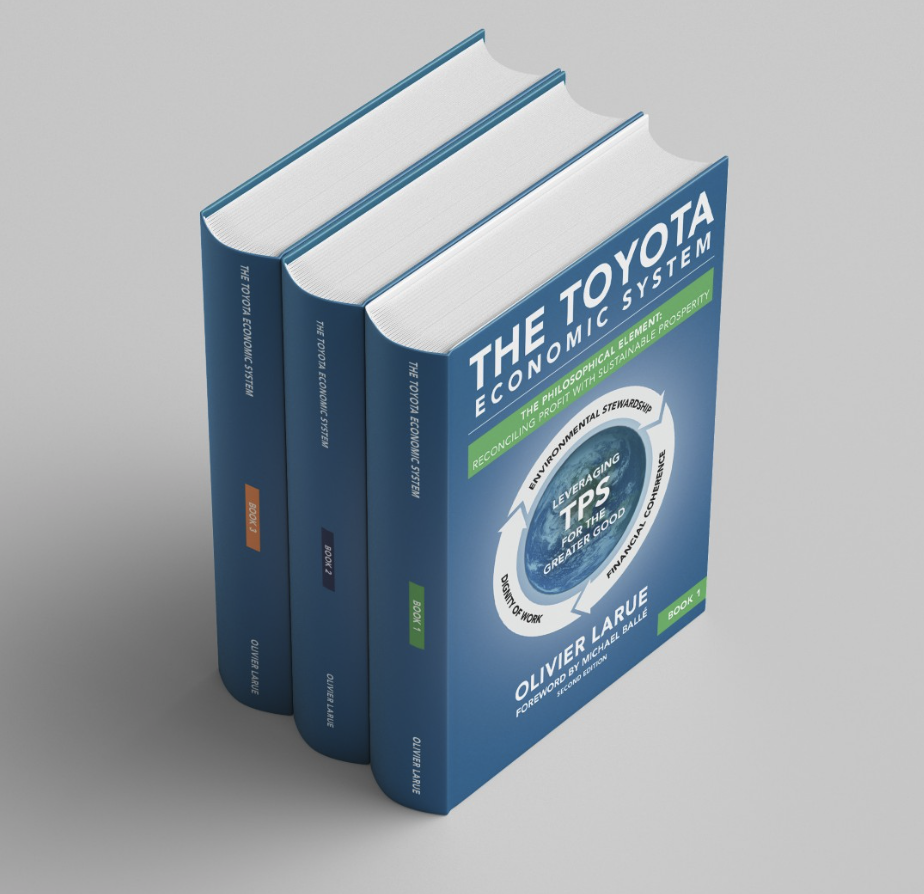
Olivier Larue interned at NUMMI and is a former practitioner at the Toyota Supply Support Center (TSSC). He is the author of the three-volume series The Toyota Economic System, which explores the philosophical, technical, and managerial foundations of TPS.

THE AUTHOR

Read more


INTERVIEW – At the recent Lean Healthcare Transformation Summit in Brussels, Planet Lean editor Roberto Priolo sat down with John Toussaint to discuss the state of lean thinking in healthcare, its challenges and its opportunities.

PROFILE – It isn’t every day that you come across a hospital CEO coaching people on A3s and following his own standard work. So when you do, it’s important to share their story. This month we profile the CEO of a Brazilian cancer treatment center.

FICTION – Santa is struggling to locate the many children who are hiding from war to deliver them gifts, until the lean Time Benders come to the rescue and help him understand the problem.
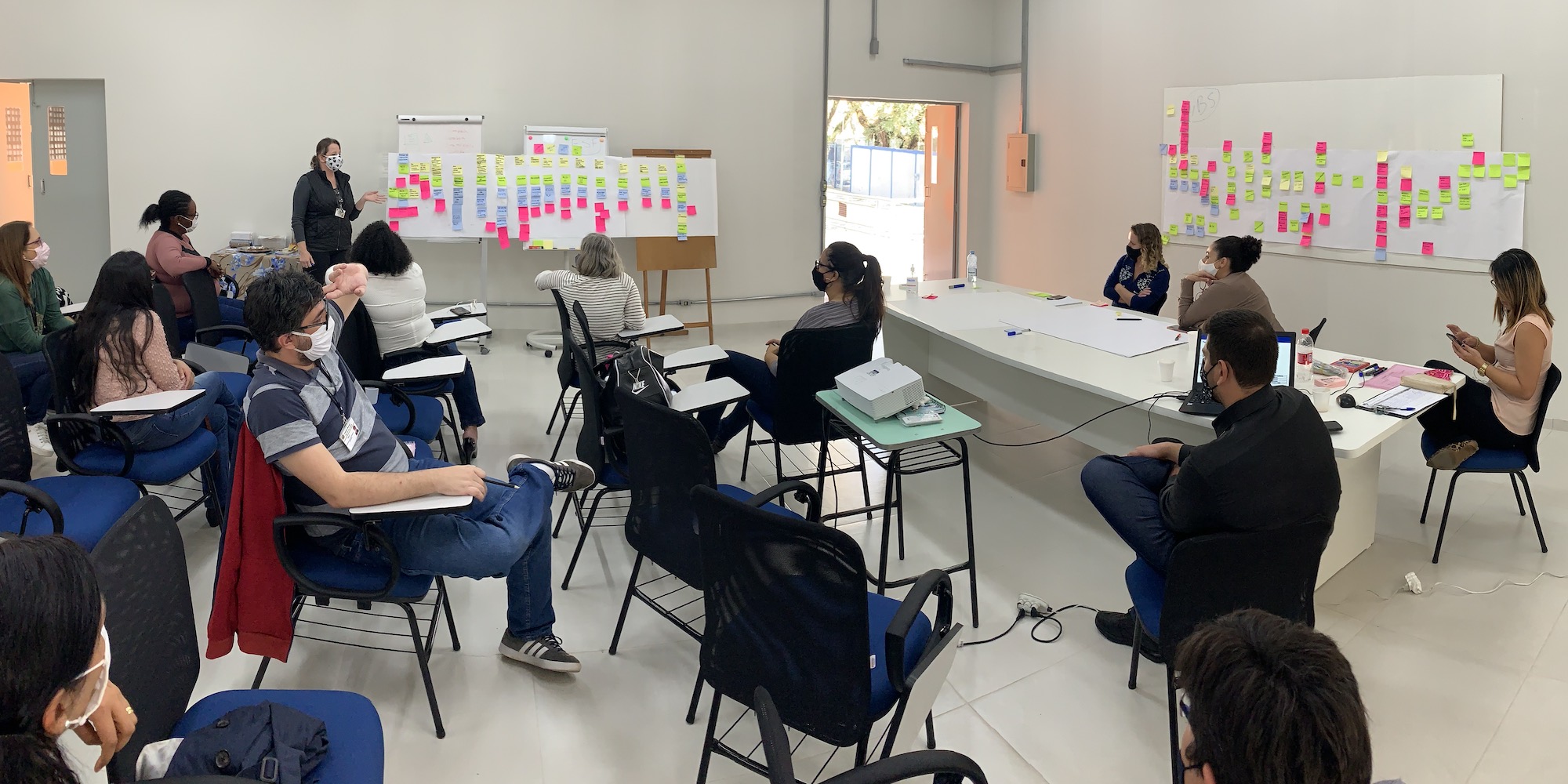
CASE STUDY – This project in Brazil, part of a city-wide effort to improve patient flows, led to impressive results in the waiting time to access cancer care.
Read more
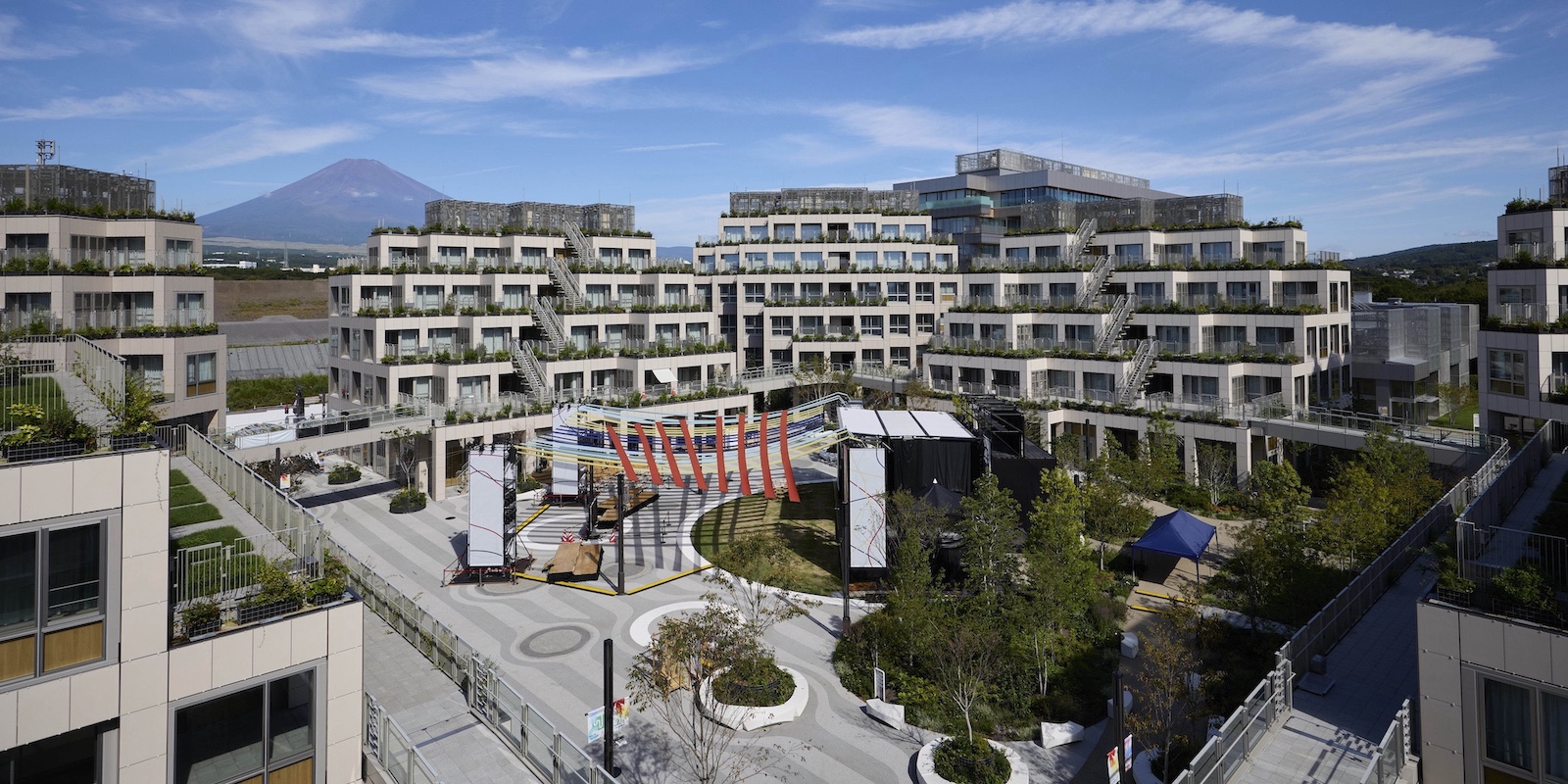
FEATURE – Toyota’s Woven City provides a blueprint for radical innovation based on a three-level learning architecture and “kakezan” partnerships, enabling experimentation, real-world validation, and scalable value creation.
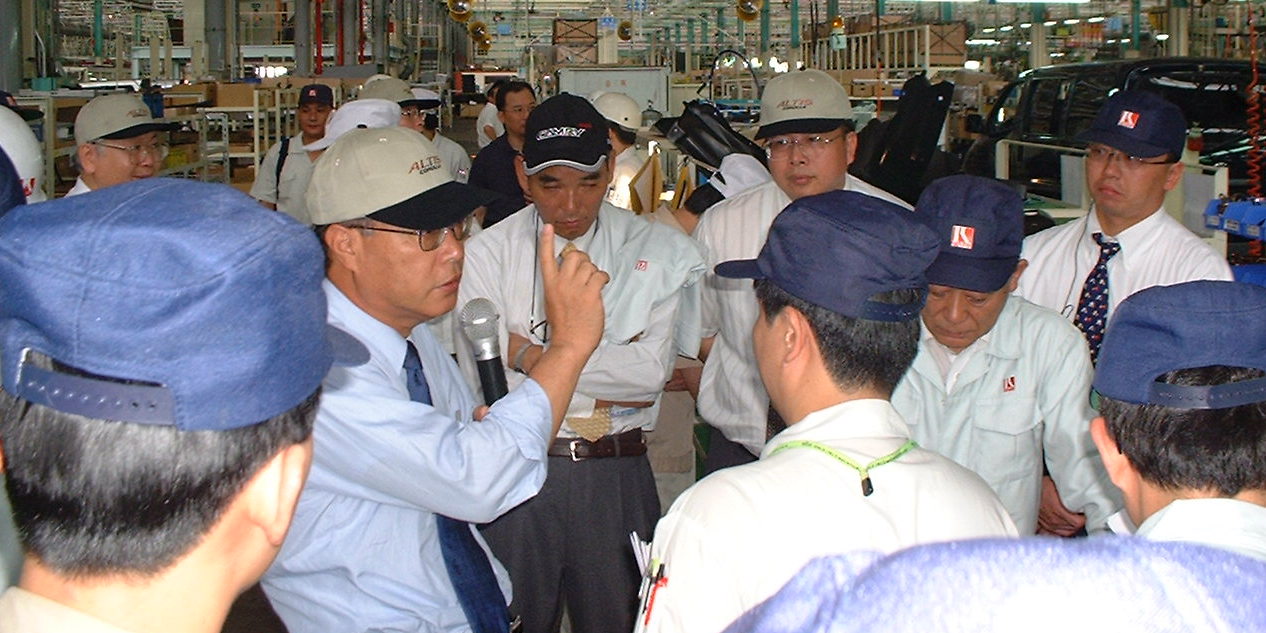
FEATURE – This intimate account looks back at the time one of the authors spent working with Harada-san and how it shaped his career and encouraged him to spread TPS knowledge.

FEATURE – A real understanding of Lean Thinking can only stem from an exploration of its tacit aspects, not just its most explicit, easy-to-grasp elements.
FEATURE – Digital organizations are starting to recognize that Toyota’s unique approach can show them the way forward, just like it does “traditional” organizations. Here, we hear from a few startup CEOs following their trip to Japan.