

All business is problem solving: when Nike met Toyota
FEATURE – Drawing on his career as a lean manager for a Nike supplier, the author traces how Lean transformed Nike's footwear manufacturing and argues real success requires embedding problem solving in everyone.
Words: DJ Kim
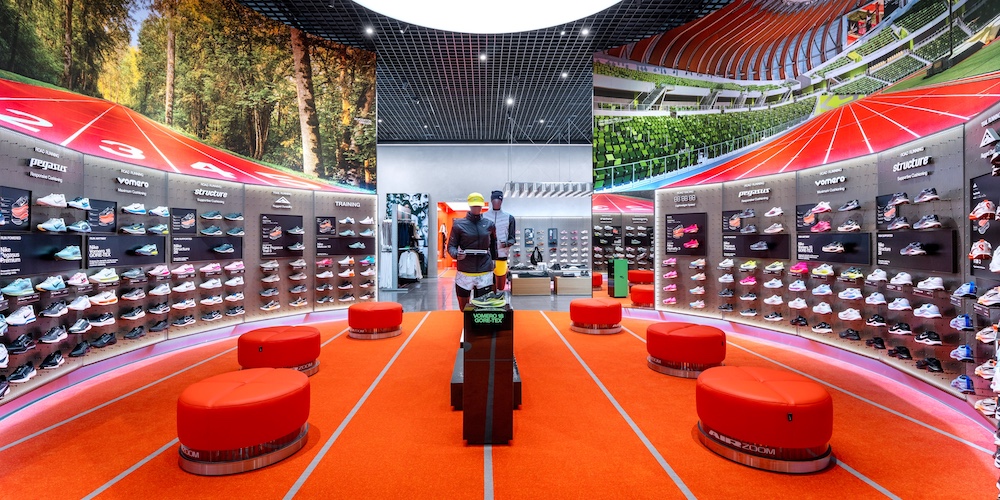
Photo courtesy of Nike Inc.
Inspired by Karl Popper’s All Life is Problem Solving, it is my personal belief that all business is problem solving, too. This idea has guided me throughout my career, first as a lean manager in one of Nike’s footwear suppliers in China and Indonesia, and later as a consultant working across different industries.
After receiving lean training from former Toyota people, like Tony McNaughton, I spent nearly a decade studying how lean principles could apply far beyond automotive manufacturing. That was a huge learning experience for me. And when I reflect on Nike’s journey through the eyes of a supplier, I see one consistent theme: success for the company came from solving problems one by one.
Nike’s rise in the US market illustrates this perfectly. The company became successful because it kept solving real customer problems. At the beginning, runners faced a simple issue: high-performance shoes were too expensive. Many university athletes could not afford expensive Adidas spikes, for example. Nike offered an alternative.
Then another problem emerged. Under co-founder Bill Bowerman’s leadership, Nike tackled the issue that Japanese shoes did not fit American feet properly. They experimented repeatedly, breaking apart shoes and redesigning them until they created better cushioning and fit. The Cortez was born from that problem-solving mindset.
Later, Nike faced another challenge in basketball. Even after becoming a leading running brand (in fact, number 1 by 1980), it still lagged behind Converse and Adidas in basketball. Products like Air Force 1 and Air Jordan 1 helped, but in my view the real breakthrough came when Nike recognized a broader shift in consumer behavior. People no longer wanted separate shoes for every activity. They wanted versatile athletic footwear.
That led to the cross-training concept and innovations like the Air Max 1, developed by Tinker Hatfield with the visible Air unit. Nike eventually became the number one sports brand globally because it continued identifying and solving emerging problems.
But success created new problems. By the late 1990s, Nike faced what many of us inside supplier factories considered a “perfect storm.” Outsourcing had expanded rapidly across Asia, creating enormous operational complexity. At the same time, public criticism intensified after reports of poor labor conditions in supplier factories, including the famous Life magazine cover showing a Pakistani child sewing a Nike football.
There were also severe quality issues. During a nationally televised NCAA game in the late 1990s, a player’s shoe fell apart on the court—the upper and sole separating completely—in a humiliating public moment for the brand. Financially, revenue was increasing, but profits were under pressure because operational inefficiencies were growing.
This was the moment when Nike turned seriously toward Lean and Toyota thinking. Former Toyota experts partnered with suppliers to redesign footwear manufacturing systems. One famous pilot factory near Ho Chi Minh City transformed its operations entirely: processes became connected, material flow improved, and large batches were reduced. The results were dramatic: lead-times and defects fell sharply, inventory dropped by roughly 80%, productivity improved significantly, and worker turnover decreased.
The transformation eventually spread across dozens of factories and affected hundreds of thousands of workers.
In the beginning, this “Lean 1.0” phase worked very well. But in my opinion, the improvements eventually plateaued because Lean became too focused on tools and compliance. Many factory lean managers began to think their role was simply to execute whatever Nike requested. Lean became associated with takt time, Kanban, layout changes, and visual boards—but not with deeper organizational learning. That is why I strongly believe technical Lean alone is not enough.
This realization led some of us to what we called “Lean 2.0.” During this phase, we shifted focus from process optimization to people development and leadership behavior. In labor-intensive industries like footwear manufacturing, front-line operators represent the overwhelming majority of the workforce. Sustainable improvement is impossible unless these people are engaged daily in problem solving.
For me, four elements became critical. The first was leader standard work: clearly defining what leaders should do every day. The second was visual management, making problems visible rather than hidden inside computers or reports. The third was daily accountability: teams gathering together to discuss problems, solve them collaboratively, and learn continuously. The final element was leadership discipline. Without sustained leadership engagement, the entire system eventually weakens.
In my personal opinion, Nike and many supplier organizations still struggle in several areas. One is Hoshin Kanri. Structures and formats were introduced, but genuine “catchball” dialogue between levels of the organization often did not truly exist. Another weakness is A3 thinking. Too often, people follow templates without deeply developing problem-solving capability.
I also believe product development remains a major issue. Decades ago, footwear development cycles were around 12 months—and in many cases they still are. Meanwhile, companies in other industries, especially Toyota, dramatically reduced development lead-times through integrated engineering and manufacturing approaches.
This is closely connected to automation. In my opinion, true manufacturing modernization in footwear cannot happen without “design for manufacturing.” Soft materials like fabric behave very differently from metal or wood, making automation extremely difficult. If products are not designed with manufacturability in mind from the beginning, factories will always struggle.
Ultimately, my biggest lesson from this journey is simple: Lean cannot belong to a small group of experts. That was one of the biggest limitations of the first phase of Lean in many factories, in which improvement became the responsibility of specialized lean teams instead of everyone.
In the age of AI and rapid global competition, this matters more than ever. Organizations need front-line operators, supervisors, engineers, managers, and executives all capable of identifying and solving problems.
In my opinion, Toyota’s greatest achievement is not just operational excellence. It is the continuity of its improvement culture across generations of leadership. Presidents change, markets change, technologies change, but the DNA of continuous improvement remains.
For any company hoping to achieve long-term success, that is the real challenge: not implementing lean tools, but building an organization where problem solving becomes part of every-day thinking for everyone.

THE AUTHOR

Read more


NOTES FROM THE GEMBA – Follow Catherine on another one of her gemba walks around French companies. This time, she visits a manufacturer of inspecting machines near Bordeaux, with a visionary leader and a great story.

FICTION – Santa is struggling to locate the many children who are hiding from war to deliver them gifts, until the lean Time Benders come to the rescue and help him understand the problem.

FEATURE – The real power of Lean lies not in efficiency tools, but in its ability to turn organizations into learning networks where interaction, engagement, and shared problem solving create lasting collective intelligence.

FEATURE – The difficulty of sustaining results often stems from our inability to monitor the KPIs that truly matter and to focus on business priorities. The author suggests a hands-on approach to strategy deployment.
Read more

FEATURE – TPS is an altogether different economic model—one that resolves the trade-offs between efficiency, flexibility, human dignity, and sustainability that mass production treats as inevitable.

FEATURE – Designing beautiful work helps design beautiful clothes. Here’s the story of how women’s clothing brand Eileen Fisher found in lean a way to support its environmental sustainability strategy.
INTERVIEW – Prior to his talk at this year’s Lean Transformation Summit, the CEO of a large apparel manufacturer tells us about the company’s lean journey, and its impact on Sri Lankan society.

CASE STUDY - Faced with high costs, low demand and growing competition from China, Turkish textile manufacturer Yesim managed to develop a competitive advantage by transforming its ways with lean thinking and increasing its focus on the customer