

Bringing gemba thinking into e-commerce
NOTES FROM THE GEMBA – This story shows how gemba visits and structured problem solving help teams at this e-commerce company uncover real problems, build autonomy, and improve decisions.
Words: Catherine Chabiron
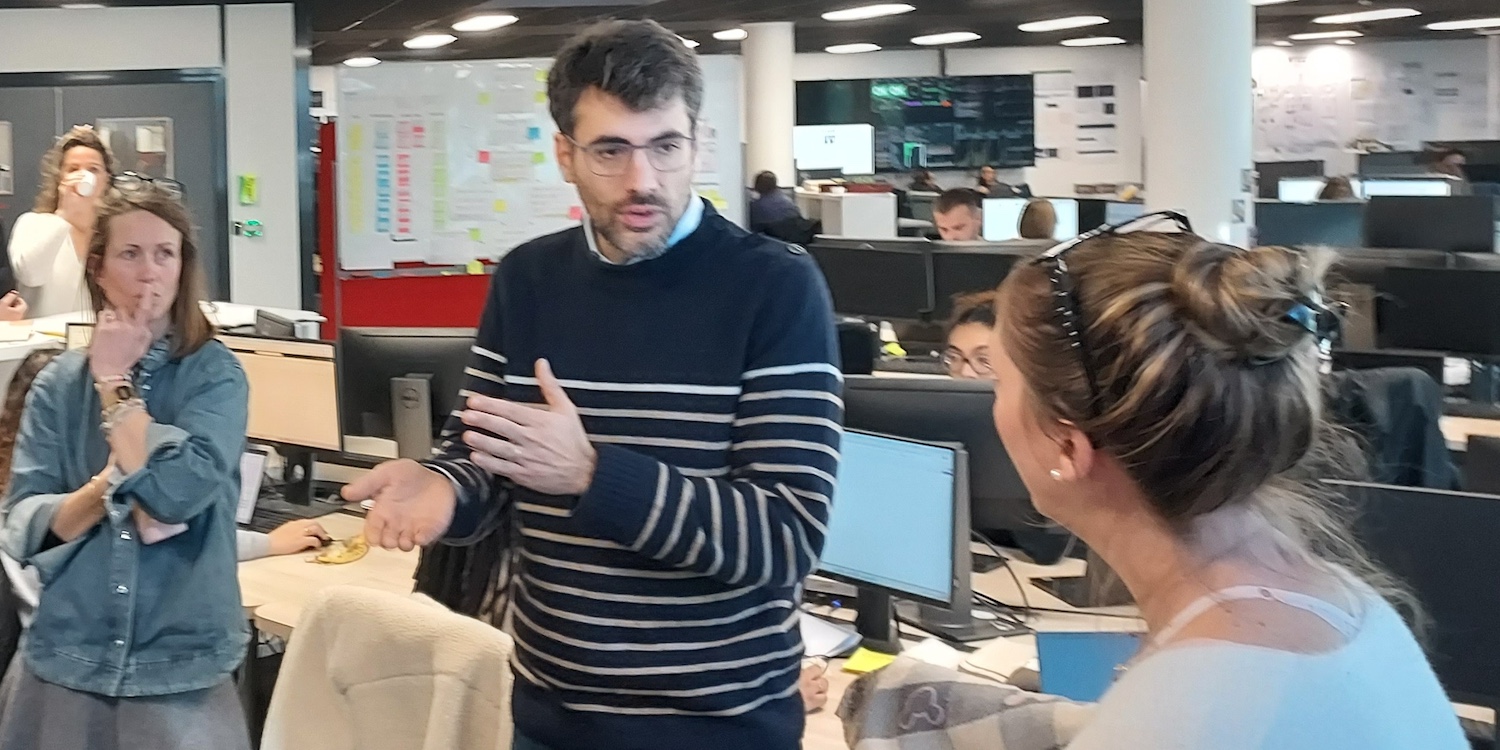
November 2025. I’m in Bordeaux, at the Cdiscount headquarters to meet with Thomas Métivier, who has been CEO since January 2023. Founded more than 25 years ago, Cdiscount is France’s second-largest non-food e-commerce retail platform, with 2,000 employees, 20 million products to manage, and sales amounting to a Gross Merchandise Volume (GMV) of €2.7 billion in 2024.
Thirty percent of sales are made directly (in which case Cdiscount operates in a B2C relationship, like a traditional retailer), while the remainder is generated through the marketplace the company created, which 10,000 partner sellers use to sell directly to consumers (a B2B2C relationship).
Thomas operates in a fast-paced environment. The e-commerce market is extremely competitive: Amazon, Rakuten, Back Market, and Temu — to name just a few — are all targeting the same customer segments. There is an endless amount of data to manage on a daily basis, with screens everywhere. E-commerce draws on fields as diverse as technology (website development), artificial intelligence (AI), sales promotion, recruiting and supporting sellers on the marketplace, customer relations (outsourced), and logistics. Chinese e-commerce is regularly in the spotlight, at the risk of increasing regulatory pressure on other players. And AI is a real potential disruptor that no online retailer can afford to ignore.
As we head up to his office, Thomas also tells me that November’s Black Week kicks off that very day! “In this business,” he explains, “the year’s success hinges on the period between late November and Christmas.” These peak times aren’t for improvisation, but the culmination of months of preparation, where every detail counts.
Thomas first encountered Lean through Raise the Bar, a book that describes the lean transformation of Aramisauto — a company whose online car sales model resembles Cdiscount’s business.
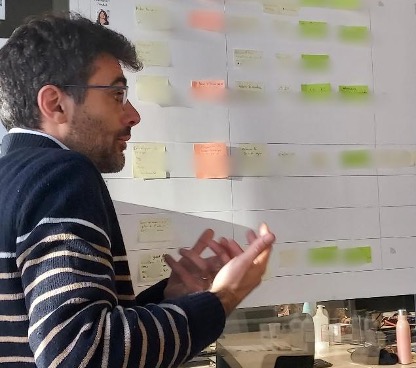
He saw Lean as a way to reshape Cdiscount’s culture: bringing teams closer to customers and the reality of the front line, increasing their autonomy, and helping them make better decisions faster. In an environment driven by volume and data — where screens display aggregated real-time KPIs and hourly reporting emails let him track activity on his phone — Thomas took a gamble: going to the gemba to examine individual cases, test hypotheses, and challenge assumptions. A highly counter-intuitive approach, given the millions of daily transactions and all the tools available to monitor activity using indicators. But, as he found out, it pays off and wins people over, and that is what I have come to see for myself.
The two field visits scheduled for this morning with Thomas will focus on the marketplace (70% of sales).
GUIDING THE TEAMS TO BETTER PRIORITIZE ISSUES
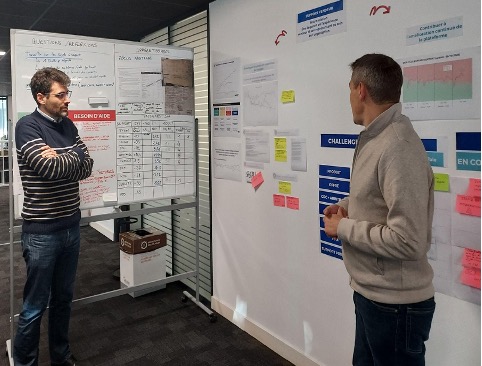
We head down to Jérémy’s office. He leads the product managers for the platform hosting the sellers (the site’s technical development is handled by a separate entity), seller support, and the creation of products to be offered to customers. Jérémy and his team have clearly mapped out, in the form of a table, the direction they want to take for the coming quarter. He gives us the example of variation groups: a customer interested in a sofa will want to explore all the variations in terms of size, shape (corner or straight sofa), materials, or colors. However, these variation groups are complex for a seller hosted on the marketplace to configure, especially since they are constrained by the system’s data architecture. From the teams’ comments on the board, it’s clear that this is not a simple issue.
Thomas poses the challenge: “It’s a real problem, but is it the right problem?”

Jérémy has been working on the sources likely to flag these issues: the sellers themselves (the support tickets they submit), the system (bug or incident logs), or delivery failures (delays, quality, “right the first time”). But the volume of such issues remains significant.
The discussion, led by Thomas, then turns to what they deliver: do the chosen challenges help identify what’s preventing teams from delivering as quickly as possible, at the lowest cost, and with the highest quality? “We review one ticket a day to see what the salespeople are asking for, and if we see a recurring issue, we tackle it,” explains Thomas. “If solving the problem of configuring variation groups helps us deliver better, then we’re headed in the right direction.”
RIGHT-FIRST-TIME TO REDUCE WASTE AND INCREASE SATISFACTION
Analyzing rework is an interesting avenue to explore, as it’s a sign of a failure not only in quality but also in timeliness and cost (having to do it twice or more takes longer and costs more). We head over to Thomas, group leader of the marketplace sellers’ support team, to see where they stand on the issue of “reopenings”—a seller reopening a ticket after it has been closed by Cdiscount.
“Before,” explains the group leader, “we aimed to respond quickly, within 24 hours. The sellers couldn’t close the ticket themselves — we were solely in charge. If they weren’t satisfied with our answer, they had to reopen the ticket. Now, we provide a response and put it on hold for 96 hours, asking the seller to let us know if they’re satisfied with it. If not, we engage in a more in-depth discussion. The seller is more satisfied — we can see that in the chat logs — and they can even close the ticket themselves.”
With the new rule, the reopening rate has dropped dramatically, as has the number of tickets, and customers are significantly more satisfied (+5 NPS points). But the team is still struggling to measure “first-time resolution” for Cdiscount’s responses. They consider a KPI based on the number of exchanges within a seller support request, but Thomas responds: “Let’s avoid averages—they cover too many different situations, and we can’t do anything with them.” A request can indeed be complex; sometimes it needs to be rephrased, questions need to be asked, and the seller may take time to provide a response.
What this exchange highlights is the team’s gradual learning process: today, the focus is less on responding quickly (timeliness) and more on responding quickly and effectively, ensuring the seller is completely satisfied (timeliness + quality). By choosing the method and discussing the options, the team demonstrates its autonomy in this area.
We’re taking the analysis a step further with Camille, the team leader for product creation in seller support—a key role that involves helping sellers upload their products online.
SPECIFIC CASES TO UNCOVER THE REALITY ON THE GROUND
Camille and her team have been working on issues that remain unresolved after 96 hours. One of the lingering problems is that sellers don’t necessarily have time within that timeframe to submit the requested documentation. Camille gives us an example: “A seller wants to improve a product listing created by another seller because it’s their product. We ask them for proof of this before granting them access to the listing.”
It turns out in the ensuing discussion with the entire team that 95% of product-related requests are for corrections to product settings rather than for assistance with using the platform. Thomas chimes in: “That’s a real eye-opener for me — I didn’t know that. That’s why I want us to be out in the gemba, so that management can get into more detail and avoid making incorrect assumptions. We think we know, and we all tend to reason in terms of averages and generalizations.”
Another recurring issue with ticket reopenings is false reopenings: 5 to 6 times a week, a ticket is reopened to start a request that has nothing to do with the previous one. Camille offers a hypothesis: “It’s easier to reopen an existing ticket to start a new request thread than to click through the entire tree structure again. Some sellers may be tempted to take the easy way out.” It’s indeed a real challenge for e-commerce sites to provide their sellers with the same seamless navigation experience on the marketplace as they do for customers. We scrutinize the website much more closely than its backend.
Thomas’s attention is drawn to the team’s visual board: while it clearly shows the problems addressed and the lessons learned, it doesn’t reveal the details of the underlying reasoning. Camille confirms that problem-solving is done on a computer.
Thomas is concerned: “For me, displaying the details in the five-column format (date/problem/cause/corrective action/result and lesson learned) lets us see what our employees are thinking, and thus, if necessary, help them correct their reasoning.” He explains that this is similar to what Camille does when training new hires: “You sit in on the first few calls until you’re certain the person can handle the issue independently. The same principle applies to problem solving: we display the reasoning until the entire team is clearly capable of handling the issue on their own.”
We leave Jérémy’s teams to head over to Marion’s office. She manages the marketplace sellers’ ecosystem, from recruitment to the “nursery” (support for so-called “strategic” sellers). Depending on their importance, sellers will then proceed independently or be supported by an account manager. Thomas does a quick calculation: “I’d say that about a third of our 10,000 sellers receive this kind of support.”
Marion has raised a new issue from the field: sellers who leave the marketplace. Some may be asked to leave if they’re fraudsters or don’t meet quality standards, but unwanted departures worry Marion.
PROVIDE A SOLUTION OR A LEARNING EXPERIENCE?
We move on to meet with Romain and Junpeng, who have begun the analysis and displayed it in a highly visual way on a whiteboard. The advantage is that we can immediately review the data related to the problem and begin to see the reasoning take shape—reasoning that was missing from Camille’s board. First insight: all departing sellers are rejecting the offer of a three-month free subscription made to try and retain them.
Thomas tries to understand: “You’re aiming for zero departures of strategic sellers, is that right? What assumptions are you making about their departures? How do we validate these assumptions?”
These questions are crucial. In a study like this, it’s very tempting to brainstorm the causes: “They aren’t generating enough revenue to cover the fixed monthly subscription fee”, “The subscription is cheaper elsewhere”, “Our support isn’t responsive enough,” and so on.
But this is where Thomas’s decision to have the teams focus on specific case studies pays off. Junpeng took it upon himself to call several sellers on the way out (he holds such a session every Tuesday). These calls revealed a few specific cases, such as a company closing down or another that is too seasonal to justify paying a fixed monthly subscription fee.
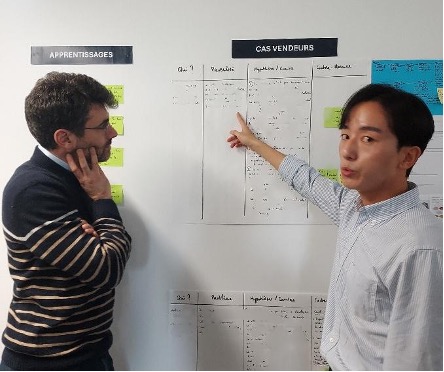
But one of the cases studied in detail by Junpeng provides interesting insights for marketplace engineering. A Chinese seller tried everything to resolve his problem and filed 39 support tickets to no avail: since his products come from China, the long delivery times are lowering his quality rating, which automatically reduces his visibility on the site. No one offered him a solution to store his products in France.
The discussion becomes fascinating: Romain’s team began brainstorming countermeasures, but the scope of the corrective action — which spans multiple departments — is beyond their control. There’s a high risk that their efforts will be thwarted. “Seller support isn’t equipped to handle this either — we expect them first and foremost to respond effectively to inquiries,” adds Thomas.
LEARNING TO IMPROVE MARKETPLACE ENGINEERING
The discussion goes on : to help them succeed, shouldn’t they instead turn this analysis into a comprehensive learning exercise, by trying to learn from departing sellers how the issues raised are handled elsewhere by their competitors? Then share these insights with the teams involved and the executive committee to build a common understanding of the challenges faced and opportunities to improve the system?”
Thomas is on board: “We take good care of the ‘top sellers,’ but no one follows up with the others. Yet we worked hard to bring them on board and support them.”
This touches on a crucial point: a team, motivated by the analysis it’s conducting, may want to solve a major and complex problem that requires negotiation and collaboration with other teams who are less motivated by the issue. Marion explains: “When interacting with other teams, we try to understand their priorities and their perspective, but the perception is that others don’t do the same.” Adopting a lean strategy in a company of 2,000 employees isn’t simple; it can only happen gradually and at each person’s own pace. Thomas knows this and can’t afford to push forward — and thereby endanger — a team that isn’t sufficiently supported.
Conversely, if the competitive analysis confirms that the issues raised — including support for strategic long-distance sellers — are weaknesses for Cdiscount, the marketplace engineering team must address them as part of improving the offering to sellers. The learning is therefore highly encouraged and, if the issue is confirmed, it is escalated to the right place for action.
DEBRIEFING ON LESSONS LEARNED AND METHODOLOGY
Thomas returns to the conference room with the group for a roundtable debrief of the site visits.
Jérémy has noted the risk of a disconnect between the challenges the team sets for itself in the meeting room and the actual problems on the ground. Like Marion, he likes the idea of clarifying the intent behind a delivery system: who delivers what to whom. This helps guide the visualization and choose the right problems to tackle. Thomas agrees: “If we take the example of frauds [these include, in particular, sellers who offer products at abnormally low prices and will not fulfill orders], Arnaud, who manages the technical platform used to publish their product catalog online, has a metric that he can only improve if Marion provides specific cases of suspected fraud. Visualization lets us see if the system is working and the impact we’re having on others.”
Jérémy also confirms that he wants to find a way to measure the quality of responses to seller inquiries. It’s not easy, as Thomas confirms: “We need to find a metric that doesn’t just force us to justify why we can’t meet the goal, but one that motivates us to improve it.” Once again, analyzing responses on a case-by-case basis remains the best approach to identify recurring errors and treat them as typical problems.
Thomas returns to the topic of problem solving: “We want to see the quality of the reasoning. The 5-column method is a training tool. If we don’t support the teams in how they use it, there’s no reason we’ll truly succeed in learning. We’re a fast-paced company that handles large volumes, so we struggle to be precise and specific. We need a system to track whether teams are making progress and, in return, receive feedback so we can guide them toward the right challenges.”
BUILDING AUTONOMY ON PROBLEMS AND SETTING THE RIGHT DIRECTION
This hands-on experience with Thomas shows just how far he has moved away from the traditional approach of overseeing the execution of a strategy devised by an executive committee. He prioritizes building team autonomy. Some might call patiently re-engaging teams in learning cycles a “waste of time,” but it actually offers a huge advantage.
Thomas drives improvement across the board, creating channels to understand the reality on the ground and the interconnections between teams. By going to the gemba with members of the executive committee, he also builds a shared understanding of reality — one that is often more nuanced and subtle than what’s provided by metrics, which tend to “average out” results. He thus encourages them to go to the gemba to see for themselves, to test their hypotheses, and readjusts the company’s framework and strategy to steer everyone in the right direction. In a data-driven, high-pressure, fast-paced world, this is a bold and rewarding gamble: since launching its lean initiative, Cdiscount has started to grow again. And customer satisfaction has never been higher.

THE AUTHOR

Read more


FEATURE – This insightful piece explores the true meaning of problem solving, looking at the common mistakes leaders make when they adopt some of its key practices.

FEATURE – We tend to take the “goodness” of lean for granted, but – the author says – we should stop and think about what makes lean a good business practice. Why is it a way of thinking all businesses should adopt?

FEATURE – Lean represents a strategy to understand what needs to be improved, the critical skills that must be developed to solve a specific problem – whether it’s a quality defect or a pandemic.

1 QUESTION, 5 ANSWERS – Without the active participation of people in improvement activities, lean is nothing but theory. Sadly, engaging folks is easier said than done. We asked five lean practitioners to share their approach to people engagement.
Read more
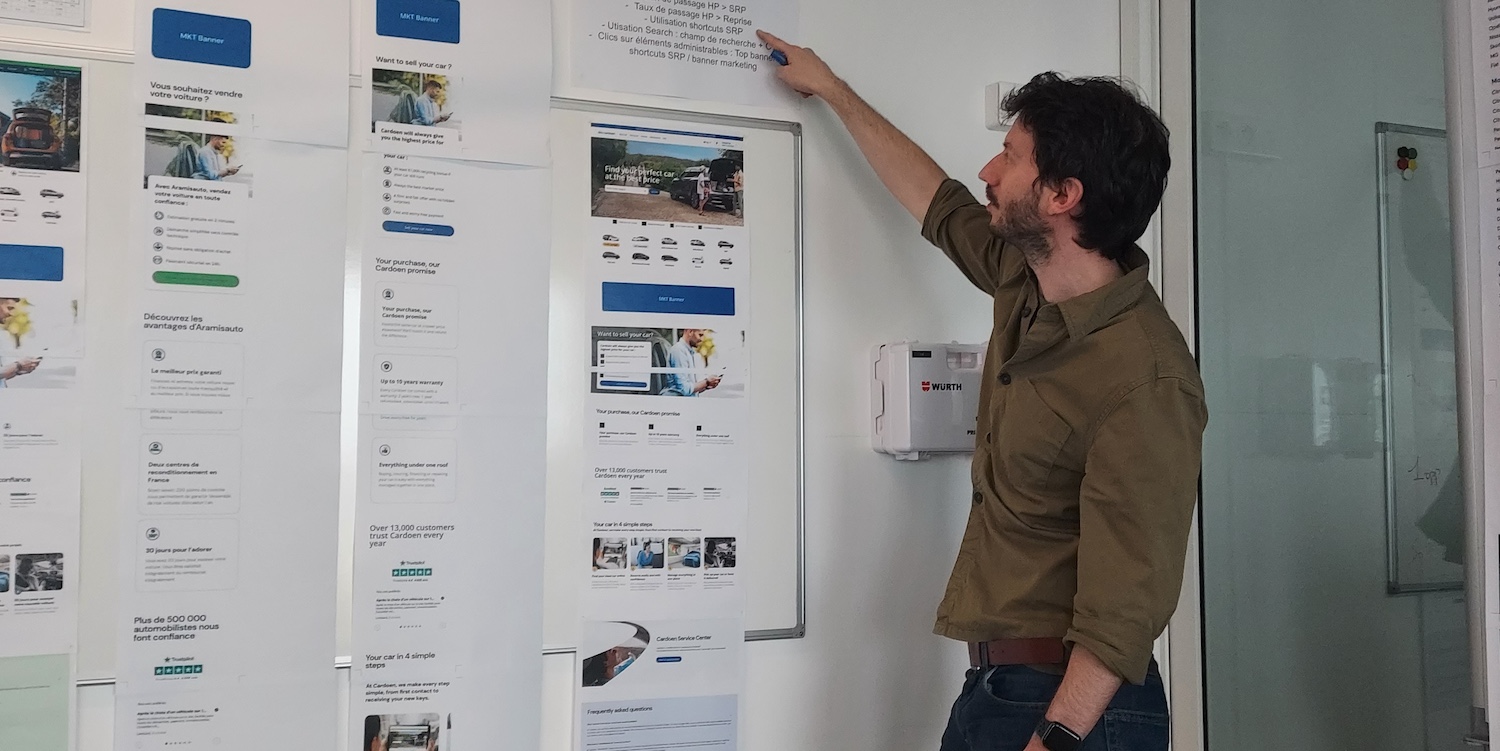
NOTES FROM THE GEMBA – In the last article about Aramisauto’s transformation, the author discovers how Lean shapes the website behind millions of customer interactions every month.

NOTES FROM THE GEMBA - The author's visit to Aramisauto's Nemours plant reveals how a lean system built around flow, quality, and people development is turning the complexity of used-car reconditioning into a competitive advantage.

NOTES FROM THE GEMBA – The author visits the Parisian airport of Orly to learn about a pilot project (pun intended) that aims to tackle the late departure of flights using lean thinking.

FEATURE - Managers often confuse doing work with managing work. Effective management requires focused metrics—service performance, customer demand, and system constraints—rather than overwhelming, lagging control data.